18:14
18:14 19:24
19:24 Wayakhel - Pekudè, Shabbath Ha-chodesh - Es. 35-1/38-20, Es. 38-21/40-38, Es. 12-1/12-20

Torino
A small group settled in Turin in 1424. Since then, a Jewish community has lived continuously in the city to this day. Their life was governed by the “Statuta Sabaudiae”, introduced by Amedeus VIII, Duke of Savoy. In 1679 it was decided a ghetto should be created. This was the first and only ghetto in Piedmont until 1723. With the decrees resulting from the Albertine Statute of 1848, Jewish citizens were granted full rights and legal equality. The ghetto emptied, and in the euphoria of their newly achieved freedom, the Jews decided to build a synagogue, a symbol of their Emancipation: the building was intended to celebrate their full integration into civil society and identify the Jewish presence in the city. After an initial unsuccessful competition, the project was awarded to architect Alessandro Antonelli, who began construction in 1863. However, significant changes to the building’s height during construction led to a significant increase in costs and, starting in 1869, forced the Community to suspend construction for a long time. No longer suitable for the community’s needs, the building was purchased by the City of Turin in 1878 and, once completed, became its symbol: the Mole Antonelliana.
The sum paid to the Community was used to purchase a new lot in the urban expansion area outside Porta Nuova, where, in 1884, the current Jewish Temple of Turin took shape.
The Sinagogue
The Big Temple
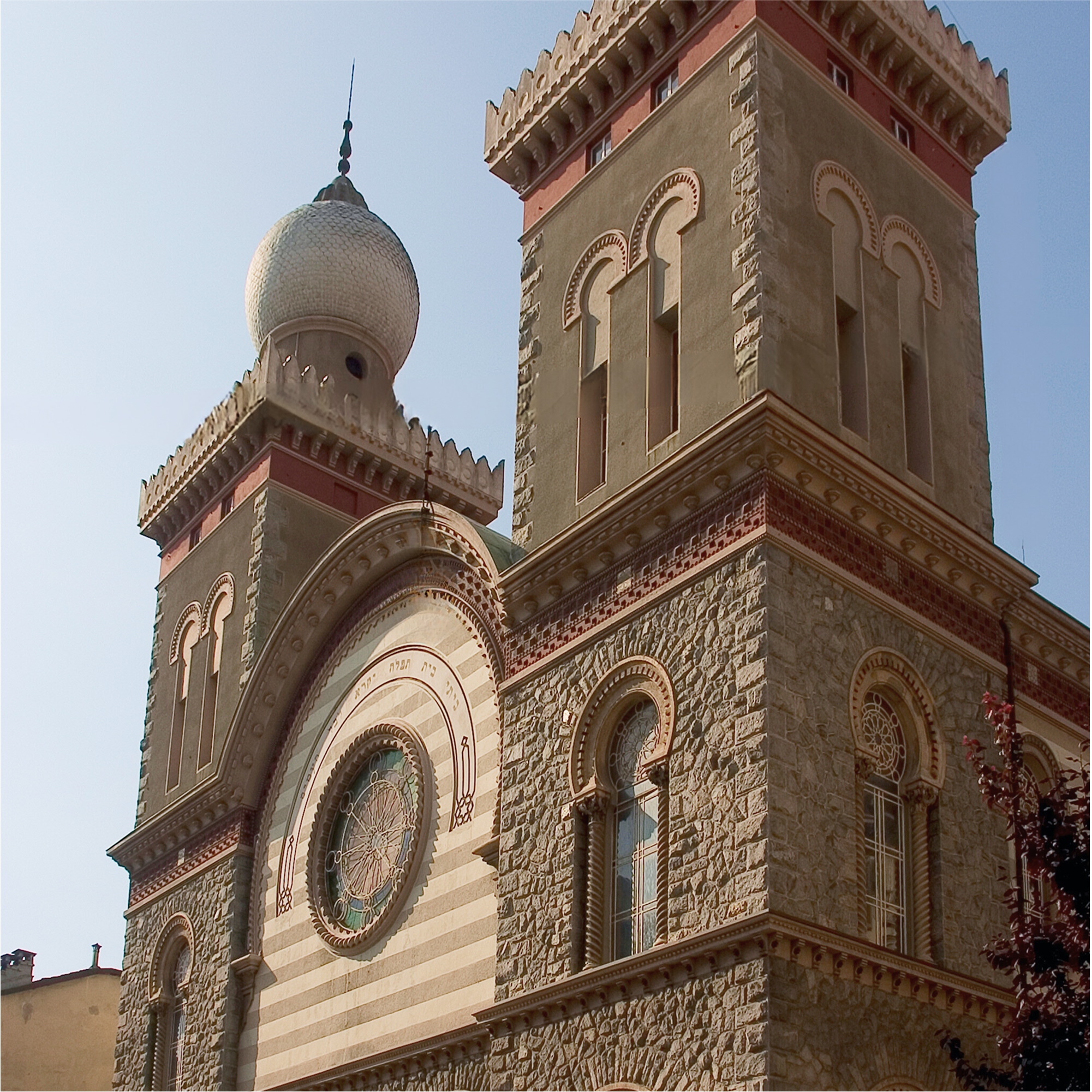
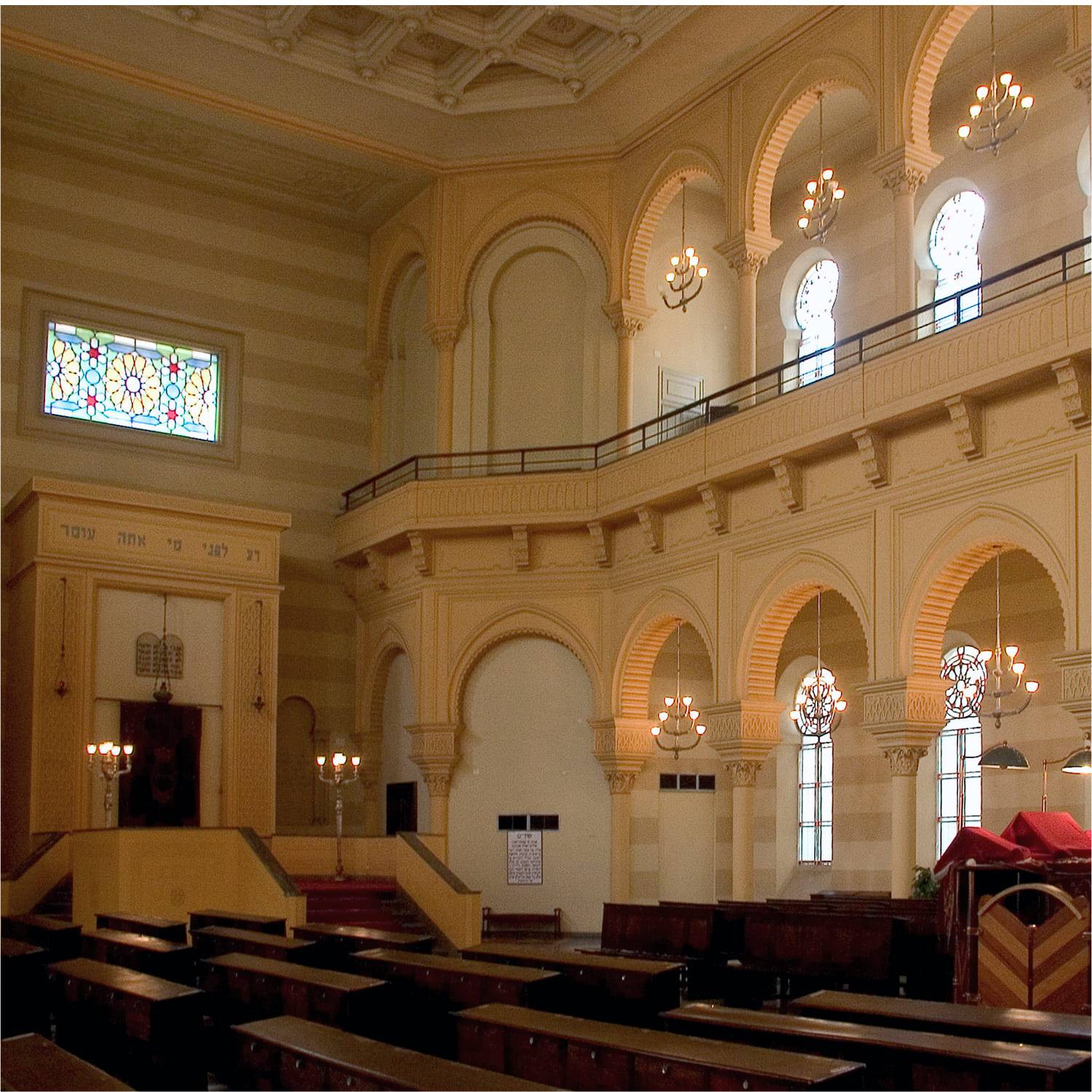
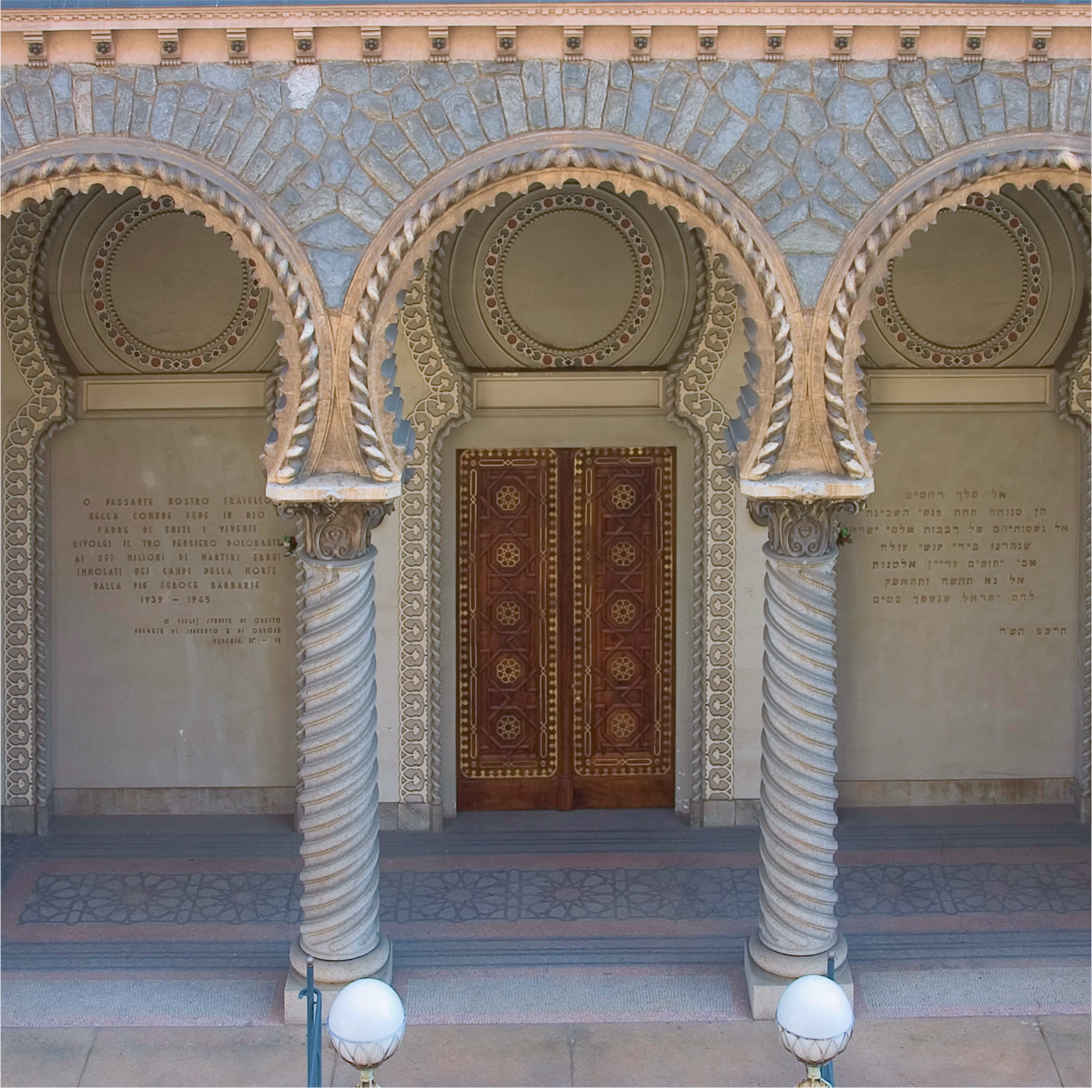
The synagogue was completed in 1884 and designed by Enrico Petiti in what was known as eclectic: the prevalence of elements of Moorish architecture specified in the call speaks to one of the most widespread trends in late 19th century European Synagogue architecture.
The richly decorated interior furnishings were destroyed by bombing in 1942. The lay-out is linear, with an aisle and two side naves, a basilica plan, typical of this period’s assimilation to the Roman Catholic model. The long rows of pews faced the tevah and aron, that were placed in a raised area. In 1986-87 a liturgical adaptation gave the hall a layout that was more in keeping with local tradition, with a new tevah placed at the centre and the pews around it.
The small Temple
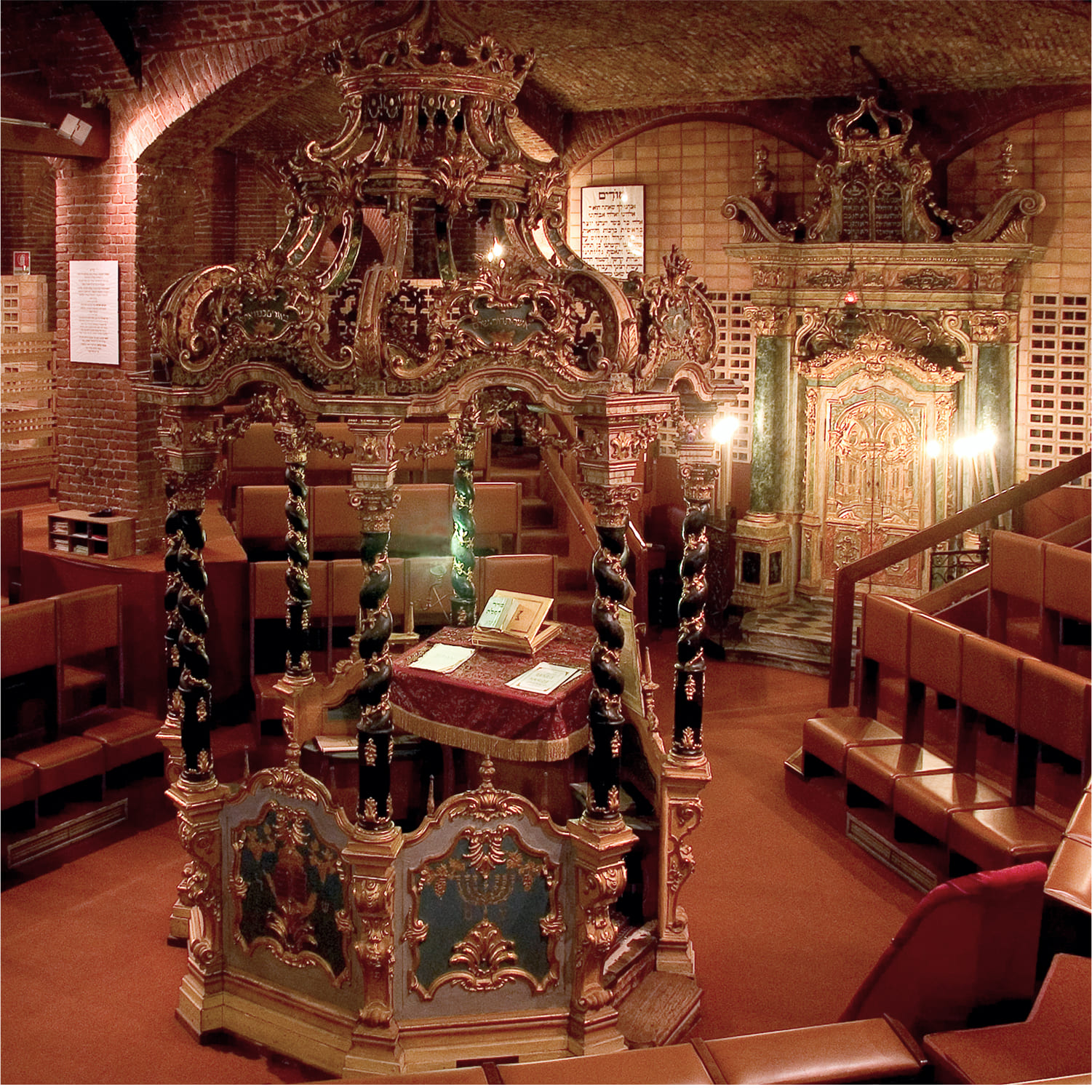
Since 1970, the basement has housed a synagogue for everyday use—the Tempio Piccolo—where the furnishings from the Chieri synagogue, which were transferred to Turin immediately after the war, have been relocated. The quality of these artifacts, in Piedmontese Baroque style, harks back to the original characteristics of the region’s synagogues. In the surrounding gallery, a permanent exhibition displays a selection of ceremonial artworks representing Jewish rites and the artistic traditions of the Piedmontese communities.
Next door, a third, very small synagogue was set up to house the aron, likely belonging to the German synagogue in Turin’s new ghetto. With seating for just a dozen, it was not actually intended for any specific purpose. This piece of furniture had great significance for the community: according to a charming anecdote, the original Baroque lacquer was covered with black paint as a sign of mourning for the death of King Charles Albert in 1849. Although this choice was most likely a stylistic update, it nevertheless became a symbol of the true sense of gratitude and loyalty sincerely felt by Turin’s Jews towards the sovereign, to whom their acquisition of civil rights was linked.
For information and visits:
Jewish Community of Turin
info@torinoebraica.it
All spaces are accessible to wheelchair users.
Please inform us of any wheelchair users.
Jewish Cemetery
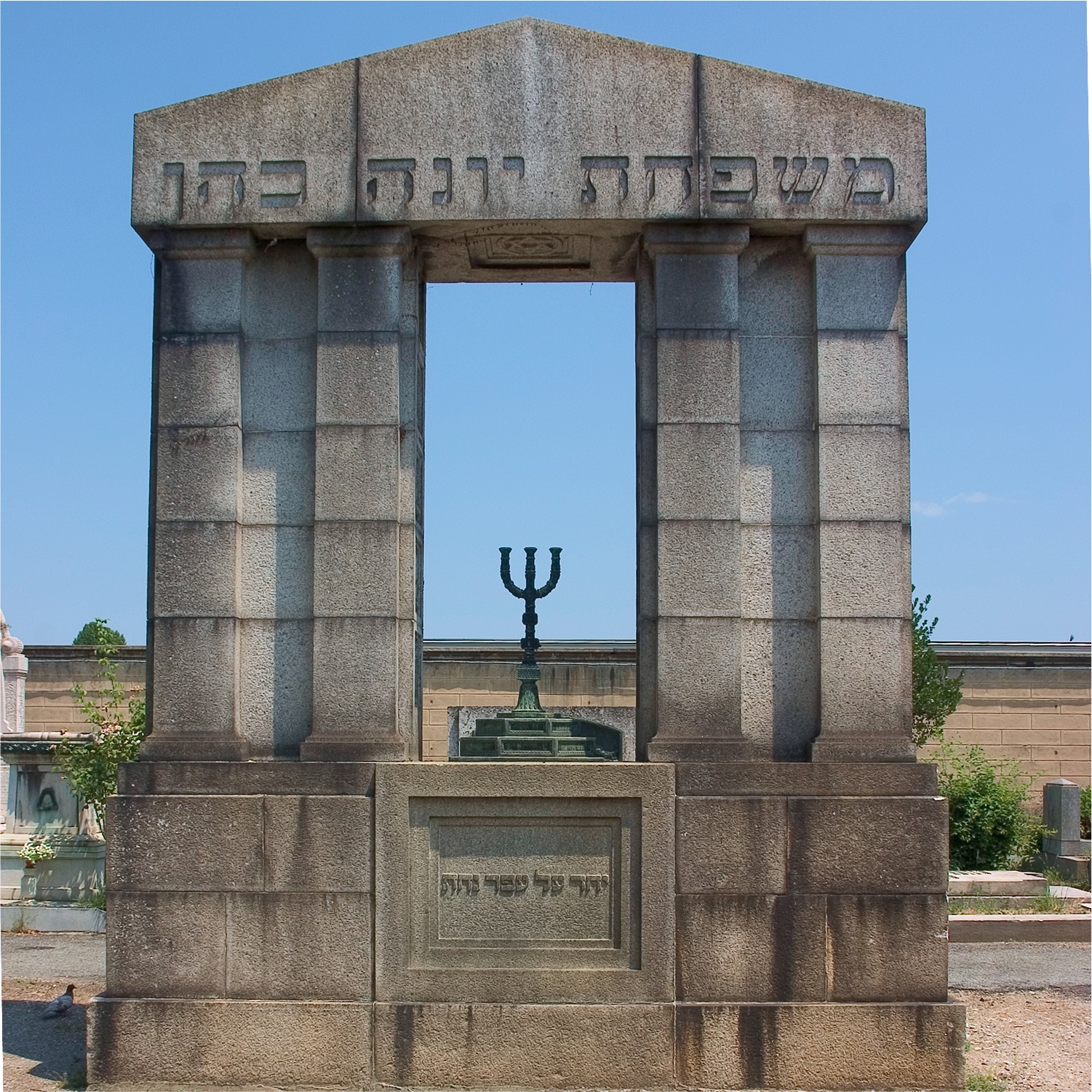
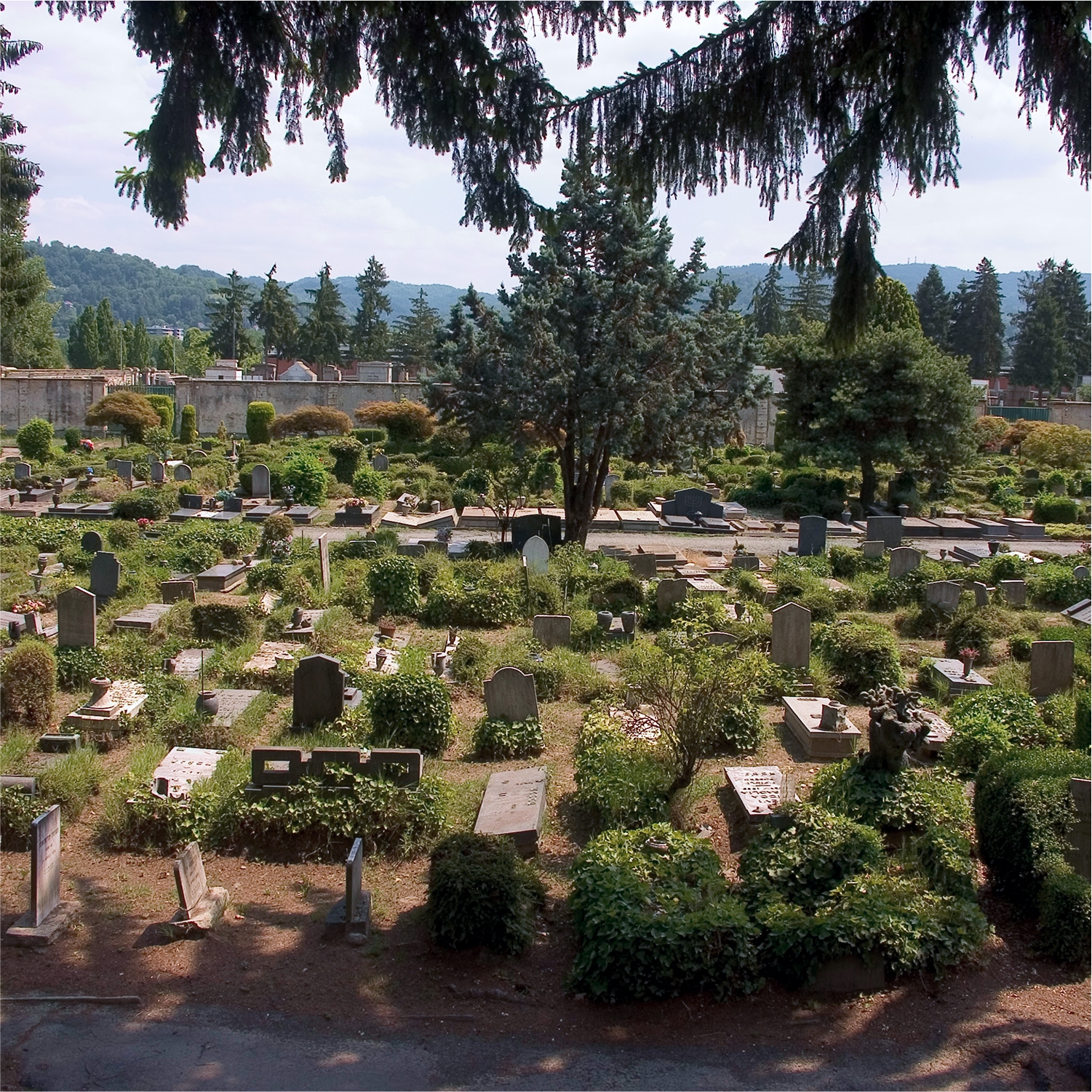
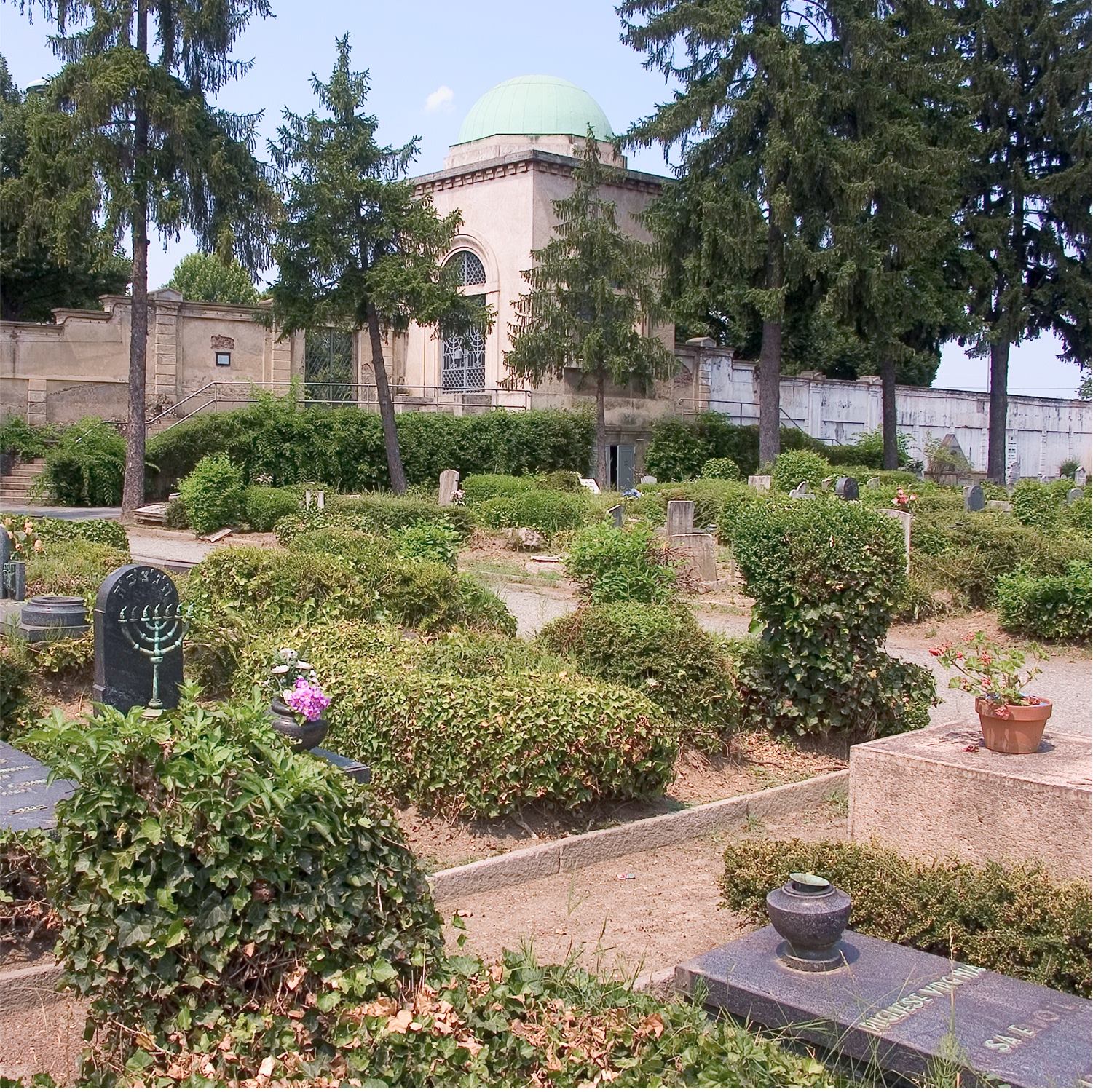
In Turin’s Jewish history, several burial sites have existed since the 15th century.. At that time, a plot of land near the Porta Marmorea, on the southern edge of the city, between what is now Via San Tommaso and Via Santa Teresa, was in use. A second plot was granted in the mid-16th century in the area between what is now Via Arcivescovado and Via Arsenale, from which it was moved the following century to allow for the construction of the artillery foundry (later the Military Arsenal). In 1668, a plot of land was assigned not far away along what is now Corso Matteotti, which was abandoned during the siege of Turin in 1706 because it was included in the military area. The cemetery was moved to the edge of the city toward the Po, near the bastion of Saint Jean de Dieu, where Via delle Rosine meets what is now Piazza Cavour. In 1772, the king had it moved again to an area further north, which was unhealthy and subject to flooding from the river. A surrounding neighborhood was known as the “Borgo del Moschino” (the “moschino” neighborhood) until it was reclaimed and divided into the present-day Borgo Vanchiglia. In 1867, the Community was finally assigned a section of the Monumental Cemetery, where some ancient gravestones were relocated. Today, there are six Jewish sections. Simple burials are found in the central areas and more elaborate family monuments along the perimeter walls. Far from Jewish tradition, some tombs fully represent the Community’s assimilation into the cemetery culture of the turn of the century. Among the most valuable examples are some neo-Egyptian chapels, neo-Moorish aedicules reminiscent of the city’s synagogue, and some creations from the 1920s and 1930s in the fifth section.
For more information on official opening hours, visit the Turin Cemetery website: