18:23
18:23 19:33
19:33 Waikrà - Lev. 1-1/5-26

Cherasco
In July 1547, two Jews obtained permission to settle in Cherasco. Around them, the town’s Jewish community formed, though it never grew particularly large. The ghetto requirement, established in the Savoy territories as early as 1723, had to be reaffirmed in the Constitutions of 1729. The following year, the Jewish population of Cherasco, along with that of Alba, was forced to move to the building on the corner of Via Marconi and Via Vittorio Emanuele.Under Napoleonic rule, the Jews experienced a first period of social equality. Many settled outside the ghetto in more affluent homes; some established silk spinning businesses and new textile businesses in the countryside. Abramo De Benedetti sat on the City Council, after he, along with his brother Donato, had already become one of the municipality’s largest taxpayers. The Royal Decrees of 1848 definitively emancipated the Jews of Piedmont; some are remembered for their important contribution to the city’s development. The movement towards larger centres, however, gradually reduced the size of the Community which, as early as 1857, was merged with that of Cuneo and subsequently with that of Turin.
The Sinagogue
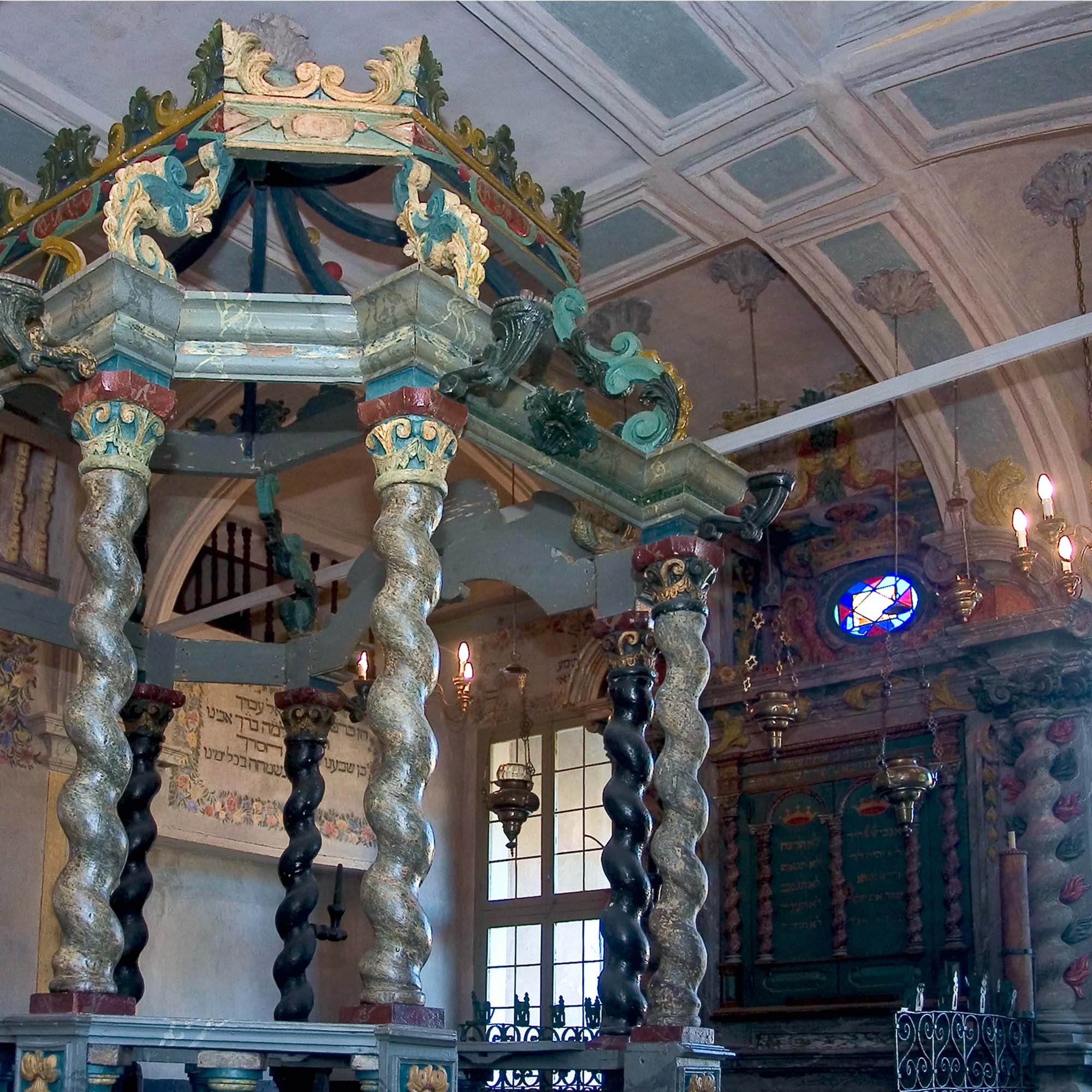
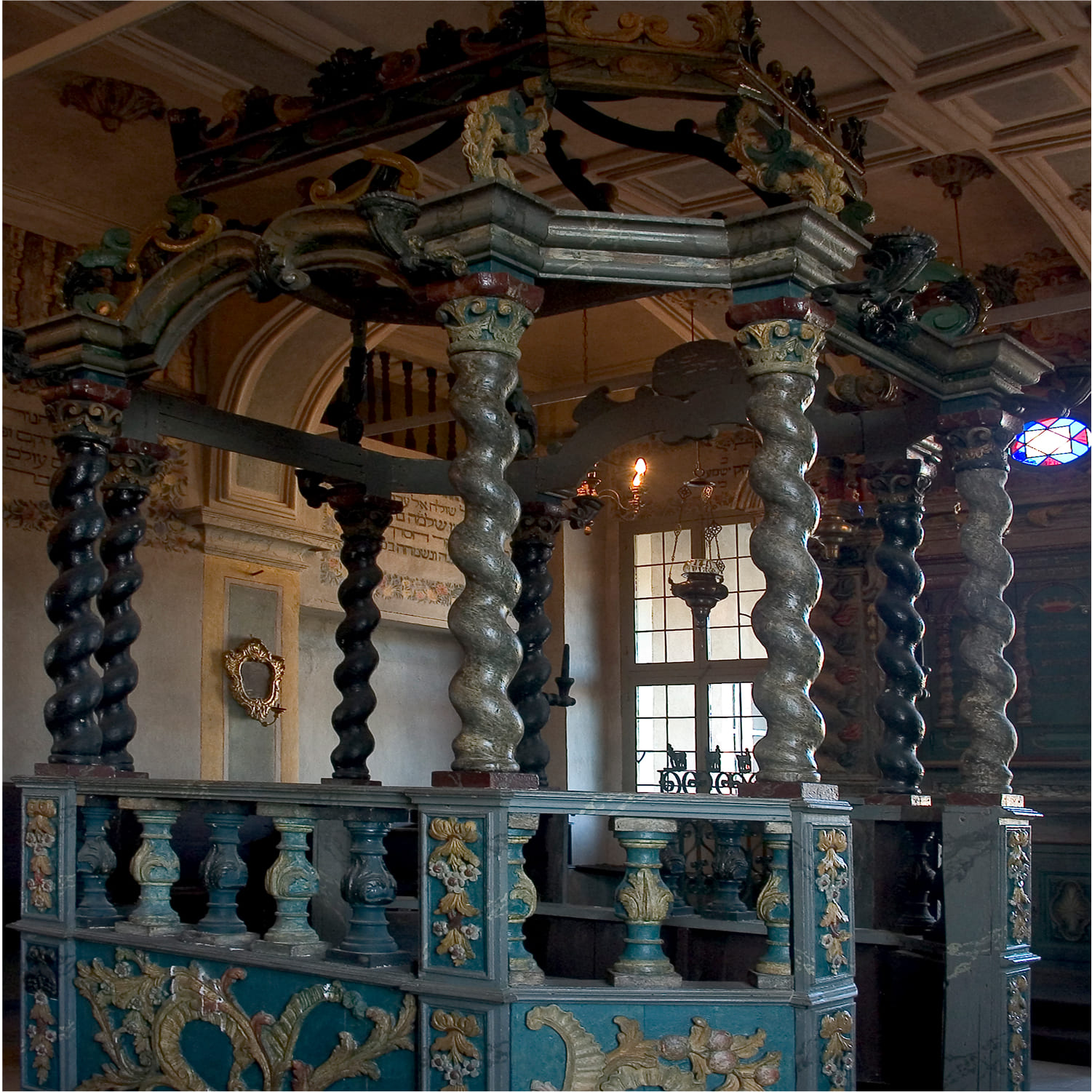
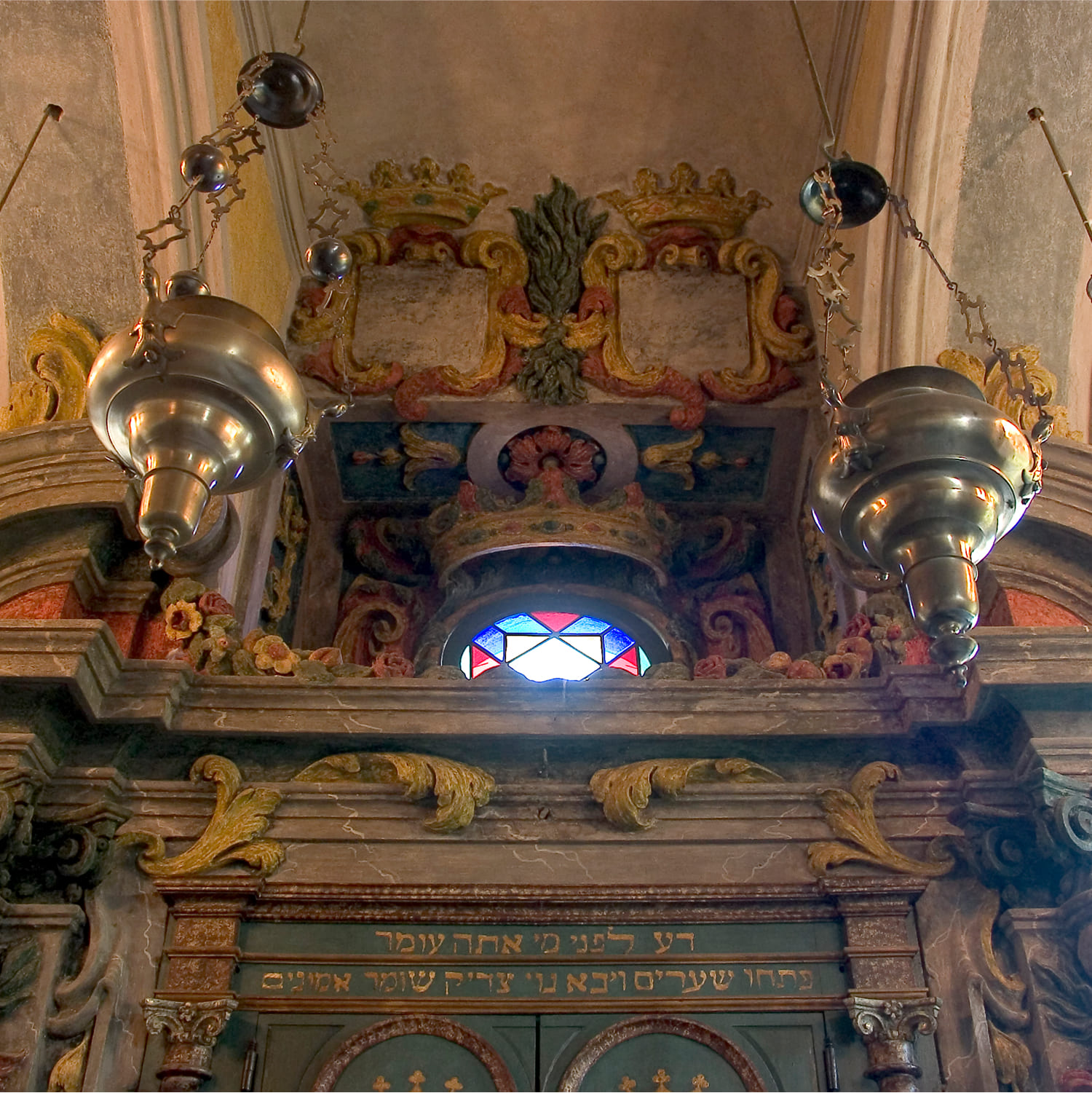
Intimate and cosy, the synagogue of Cherasco is a typical Piedmont synagogue from the age of ghettos. It was located
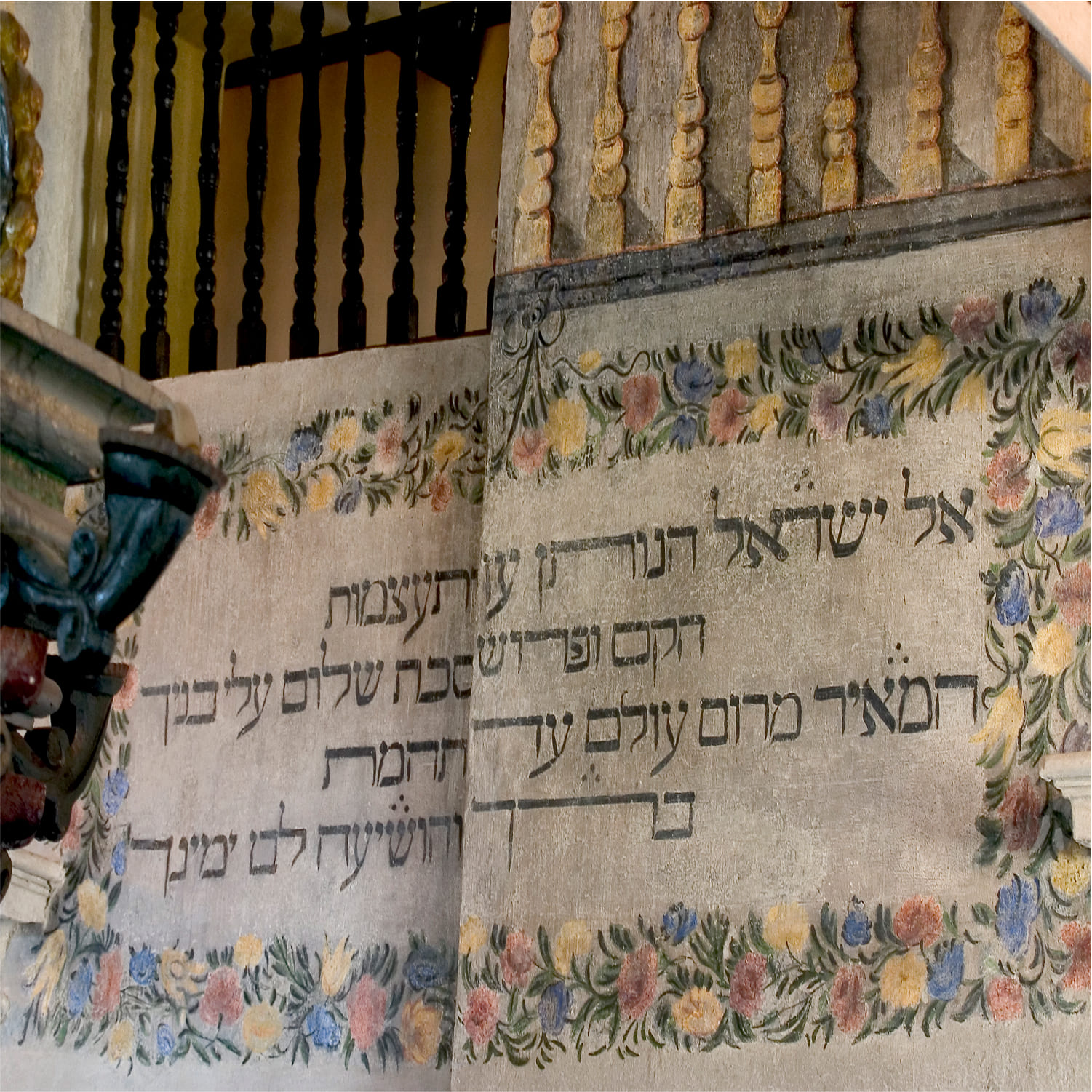
A single row of seats for the public is positioned along the hall’s perimeter. Above, there are frescoed poetic inscriptions in Hebrew, with verses containing the names of donors and members of the community. The small stage of the women is located above the entrance and concealed by a row of wooden columns painted in trompe-l’oeil along the entire wall.
The only dated element is a basin for ritual hand washing, donated in 1797 by the De Benedetti brothers. The same floor also houses a small adjacent classroom and the photographic exhibition on Jewish communities of Piedmont,
Donazioni: Fondazione De Benedetti Cherasco 1547 – tel 011.7640224 www.cherasco1547.org
Jewish Cemetery
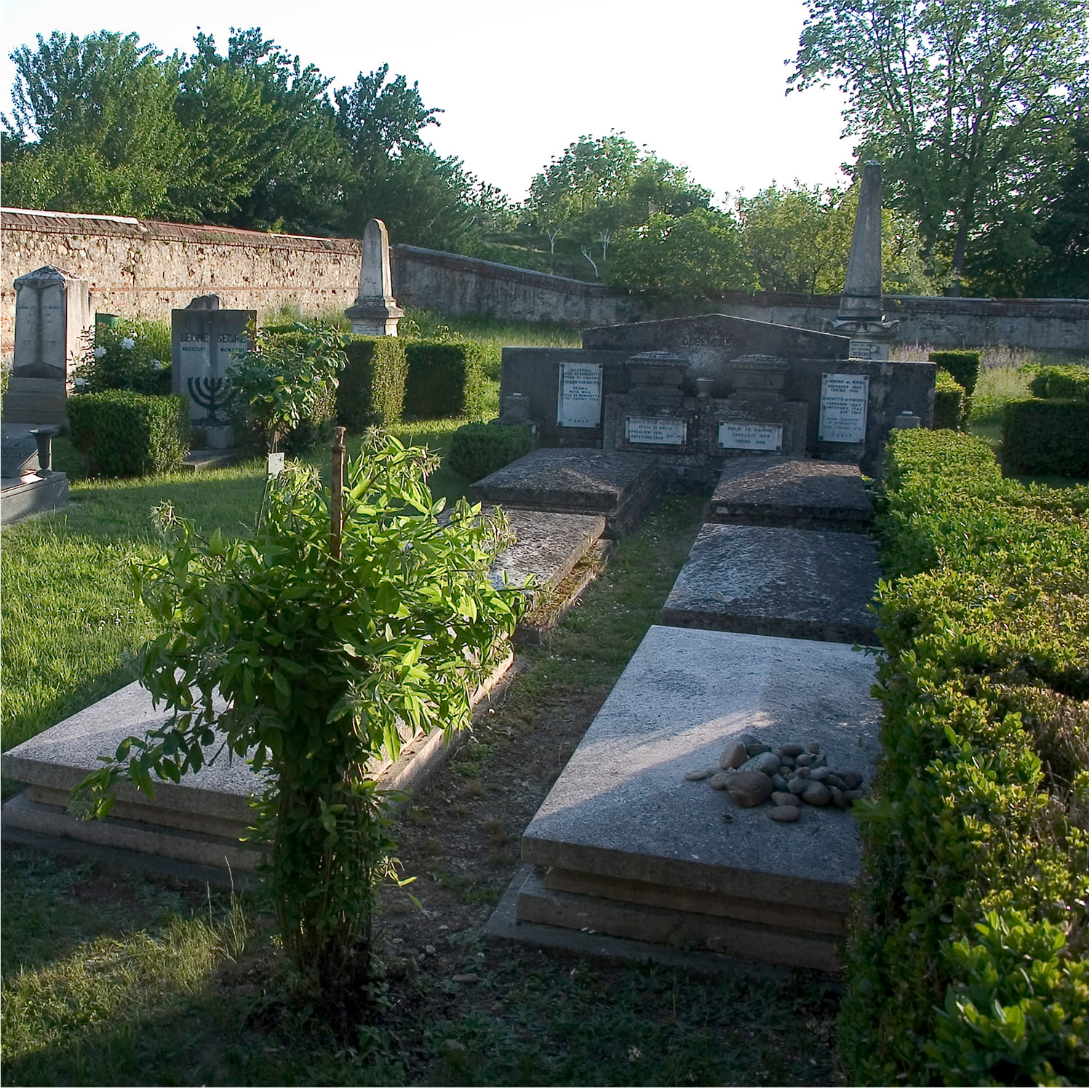
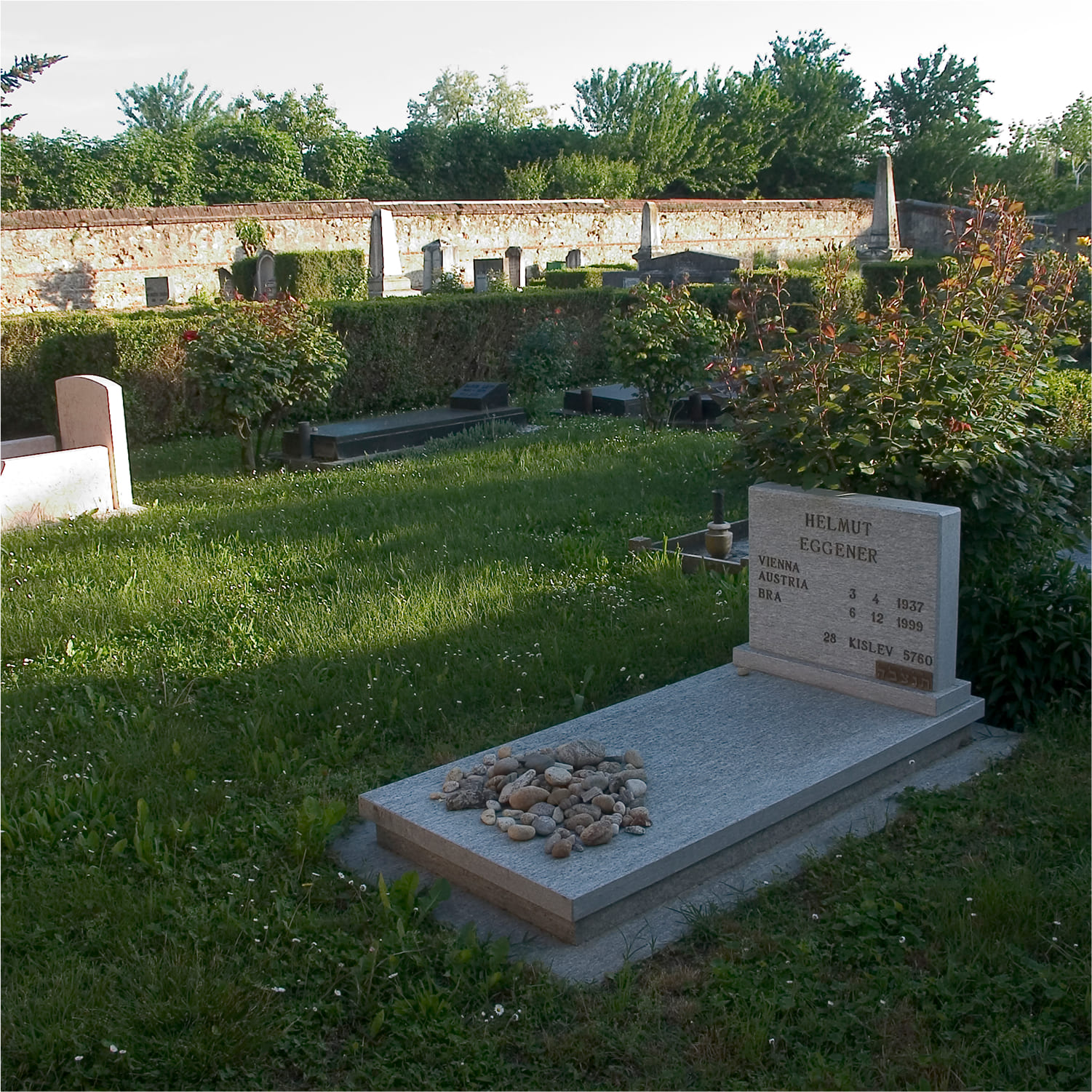
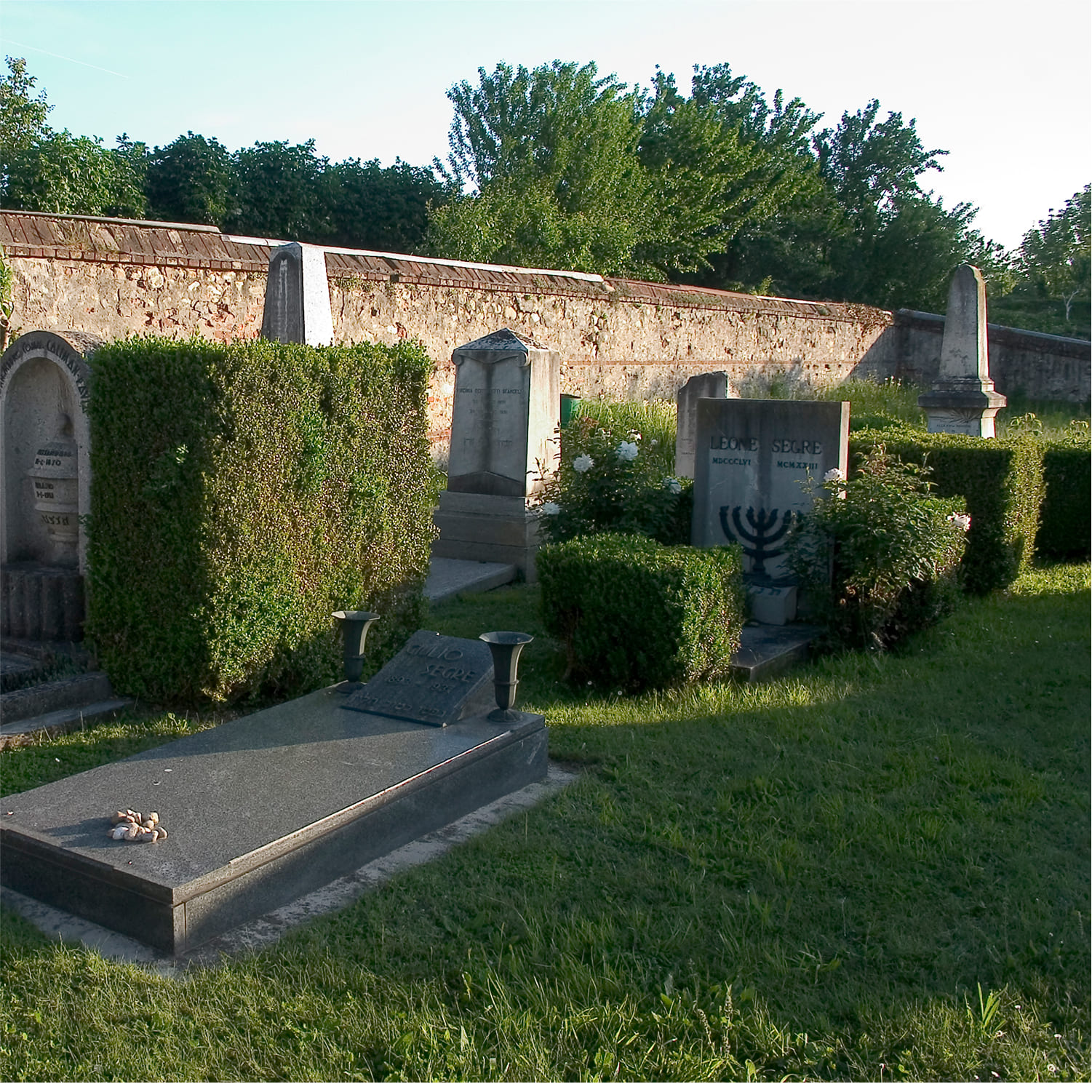
The Jewish cemetery currently in use is located in Salita Vecchia. It was established in the late 18th century as the town’s new cemetery but never entered into operation and remained abandoned until the early 19th century, when it was granted to the Jewish community. The scenic and verdant area became known as the Rocca degli Ebrei. Inside, there are only individual earth burials, mostly with simple headstones in keeping with Jewish custom. Very few are the more monumental memorial stones, influenced by the symbolism of contemporary Catholic cemeteries.
Little is known about the previous burial site. A document from 1719 attests to Gabriel De Benedetti’s purchase of land declared bordering […] the Jewish cemetery, which had evidently already been in operation in the previous era and which perhaps was intended to be expanded at that time. The site was located in the area of the ramparts to the northeast of the city.