18:14
18:14 19:24
19:24 Wayakhel - Pekudè, Shabbath Ha-chodesh - Es. 35-1/38-20, Es. 38-21/40-38, Es. 12-1/12-20

Alessandria
Among the first Jewish presences was Abramo Vitale de Sacerdoti, who, in 1490, was allowed to reside in the city to open a lending bank. In the following centuries, his family played a prominent role within the Jewish community and in relation to the city, then under the Duchy of Milan. With the city’s passage to the Savoy family in 1707, the history of the Jews became intertwined with that of other Piedmontese territories, and in 1723 the ghetto was established. The area chosen was where the Jewish population had long settled, between present-day Via Migliara, Via dei Martiri, Via Vochieri, and Via Milano (then called Contrada degli Ebrei). The Alessandria ghetto was the third most populous in Piedmont. Despite 19th-century modifications, some characteristic features, such as the internal connecting galleries and the raised floors, remain. After the Emancipation of 1848, many Alexandrian Jews contributed in various ways to the life of the city and of the Italy of the Risorgimento. Over the last century, the phenomenon of urbanization coupled with racial persecution has led to the community’s drastic decline.
Sinagogue
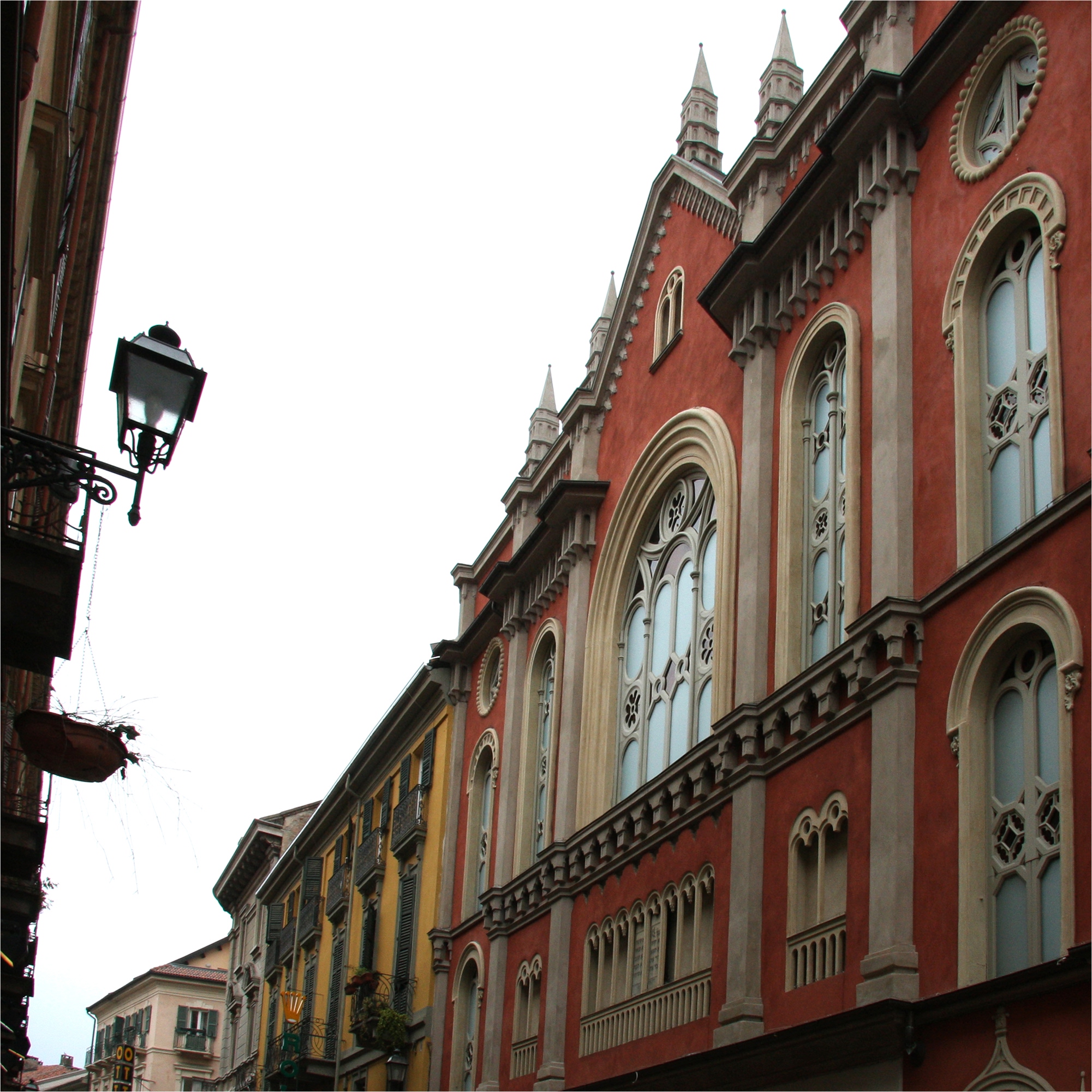
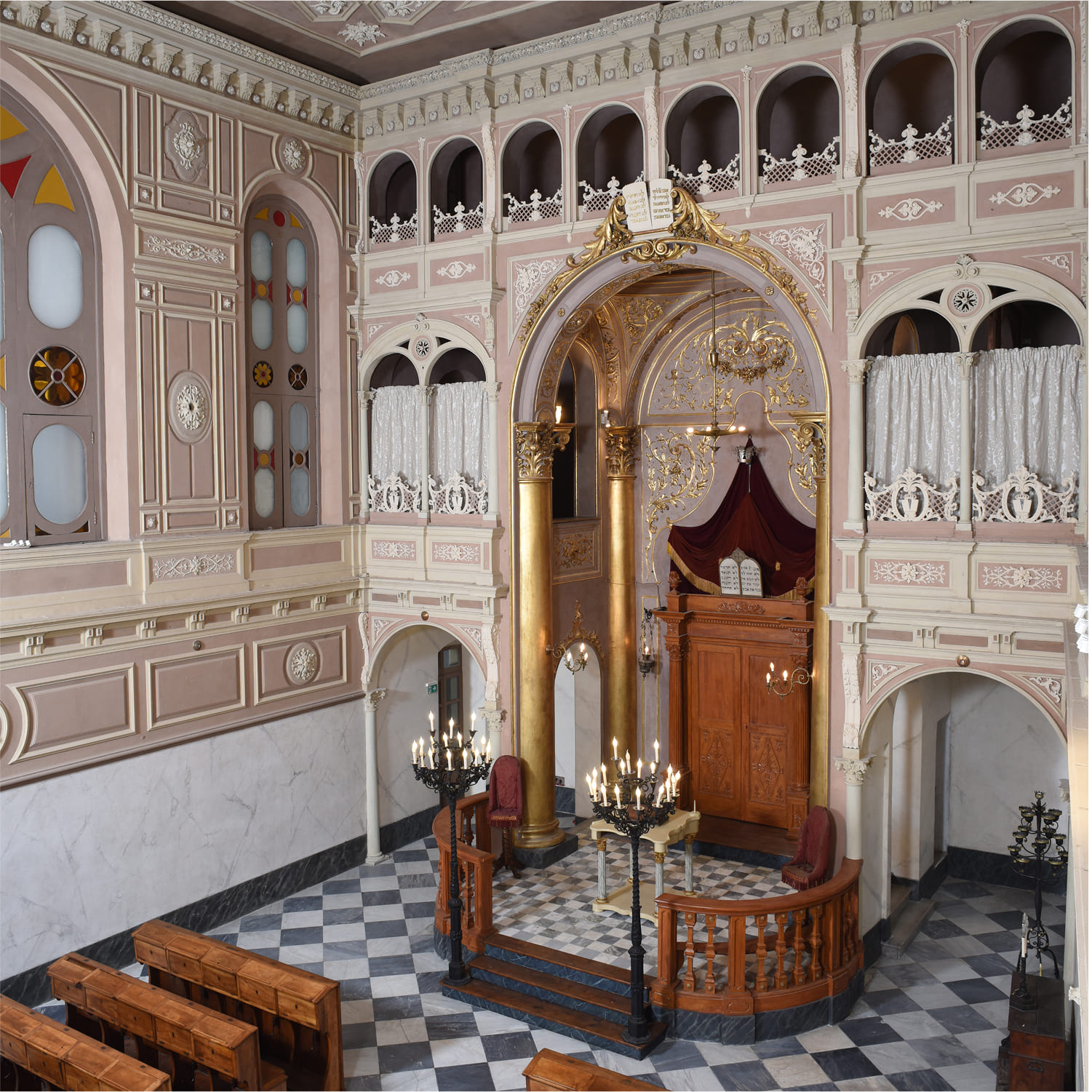
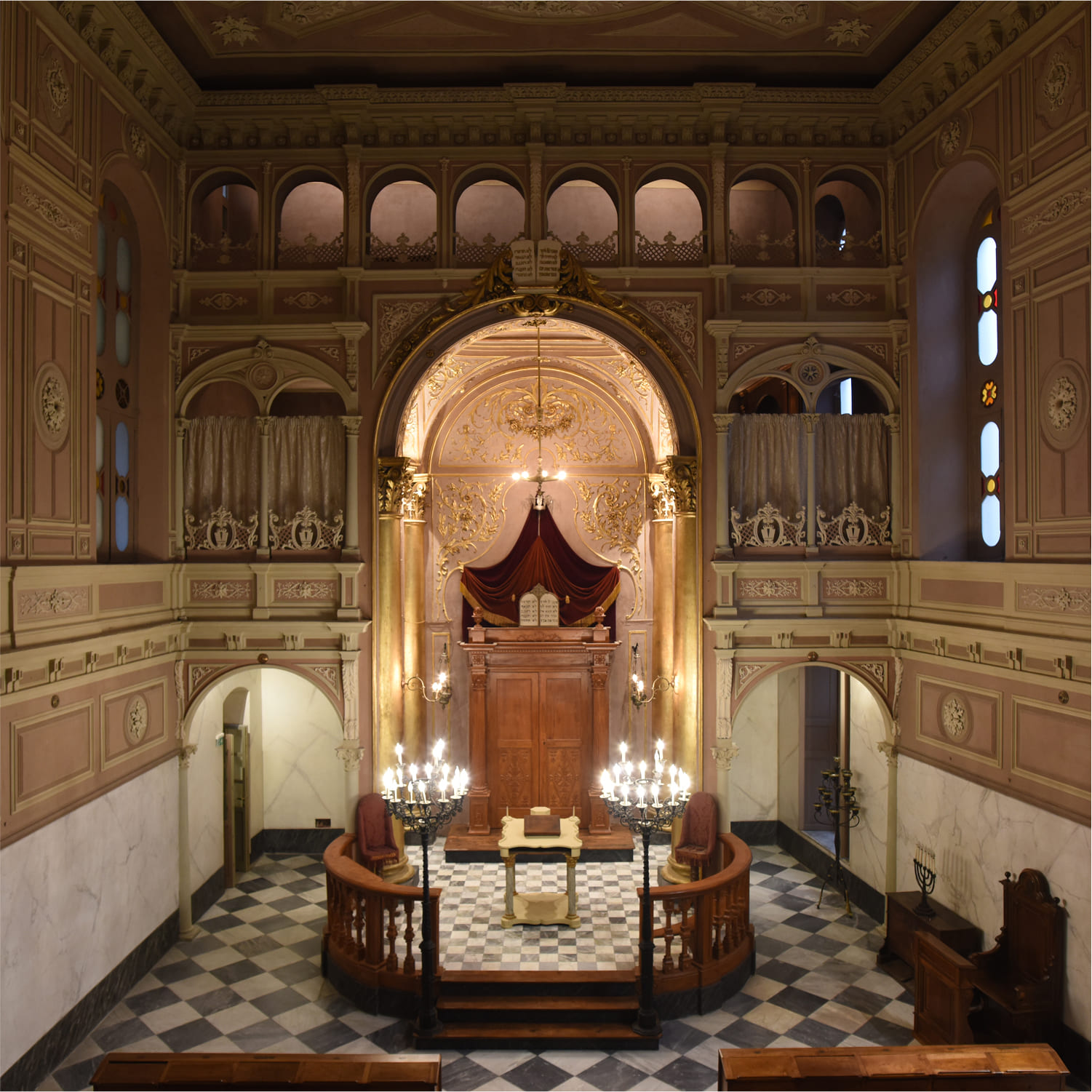
The Synagogue of Alessandria, inaugurated in 1871, is the result of the transformation of a pre-existing building in the heart of the former ghetto. As in many other cities, the Community wanted to celebrate the Emancipation of 1848 by erecting a
Following the Nazi devastation of 1943-1944, the synagogue’s furnishings were destroyed or stolen. After the war, they were replaced with those from the dismantled synagogues of Nizza Monferrato and Acqui Terme. On the ground floor is a second small synagogue, intended for use on Saturdays and weekdays.
Permanent exhibition
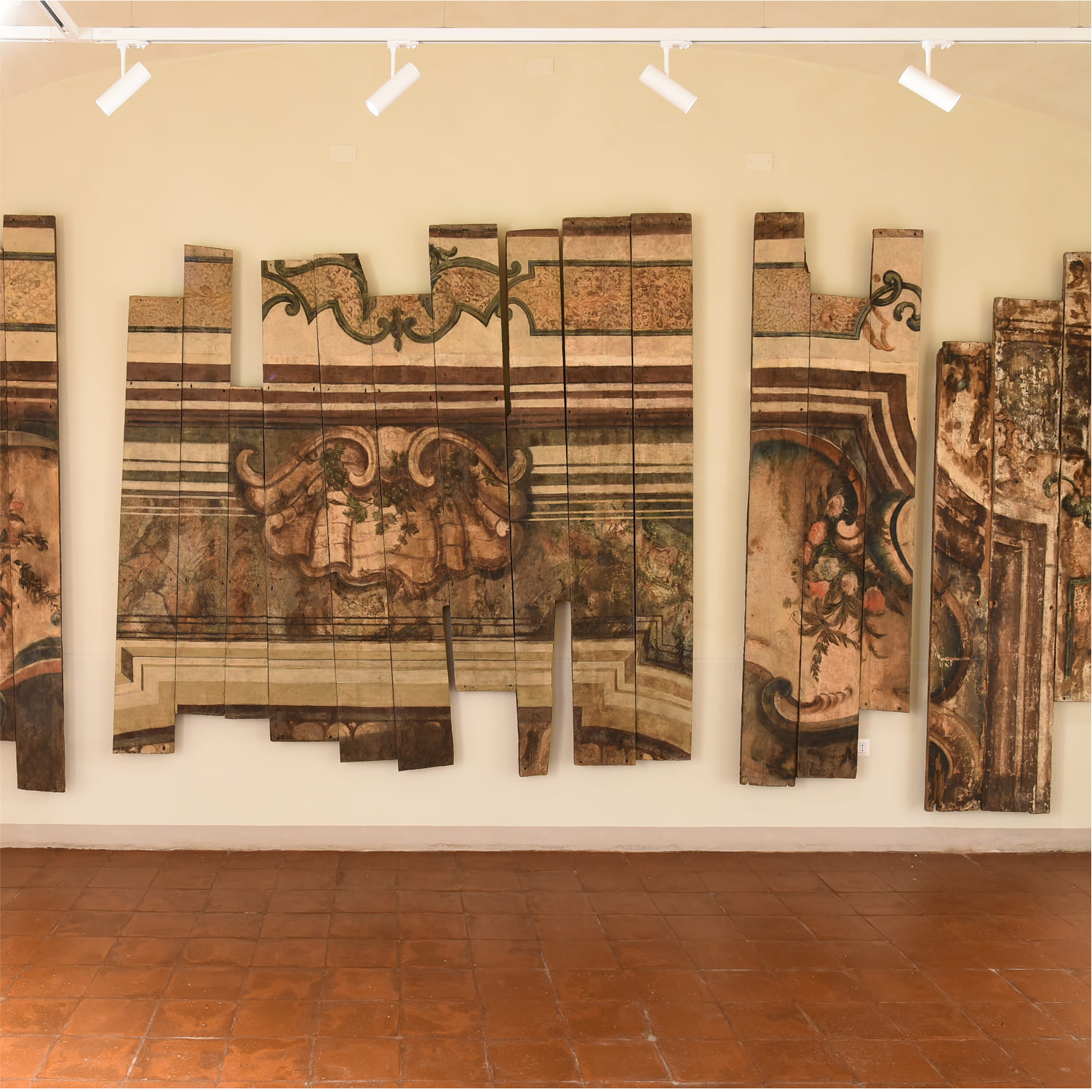
A permanent exhibition on the ground floor of the synagogue complex illustrates some of the key identifying features of Jewish life and local history, with local original artefacts and reconstructions for educational purposes. Ampio spazio è dedicato agli arredi della sinagoga e del Rotolo della Legge; preziosi manufatti tessili si mescolano a oggetti d’uso comune attraverso i quali è possibile immedesimarsi nel quotidiano ebraico e nel passato della Comunità di Alessandria. Fra questi, anche una macchina originale per la preparazione del pane azimo in occasione della Pasqua. A section is devoted to the cycle of life, with objects for personal worship, old photos, and mementoes. One of the prayer books bears a striking commemoration drafted following a tragic event in 1835 when the floor of the hall gave in causing multiple deaths among the people attending. Some of the most evocative items on display are decorated wooden tables from the old ceiling of Alessandria’s synagogue that pre-date the extensive refurbishment completed in 1871: they were re-discovered during the latest restoration as they had been used as a walkway in the new temple’s attic.
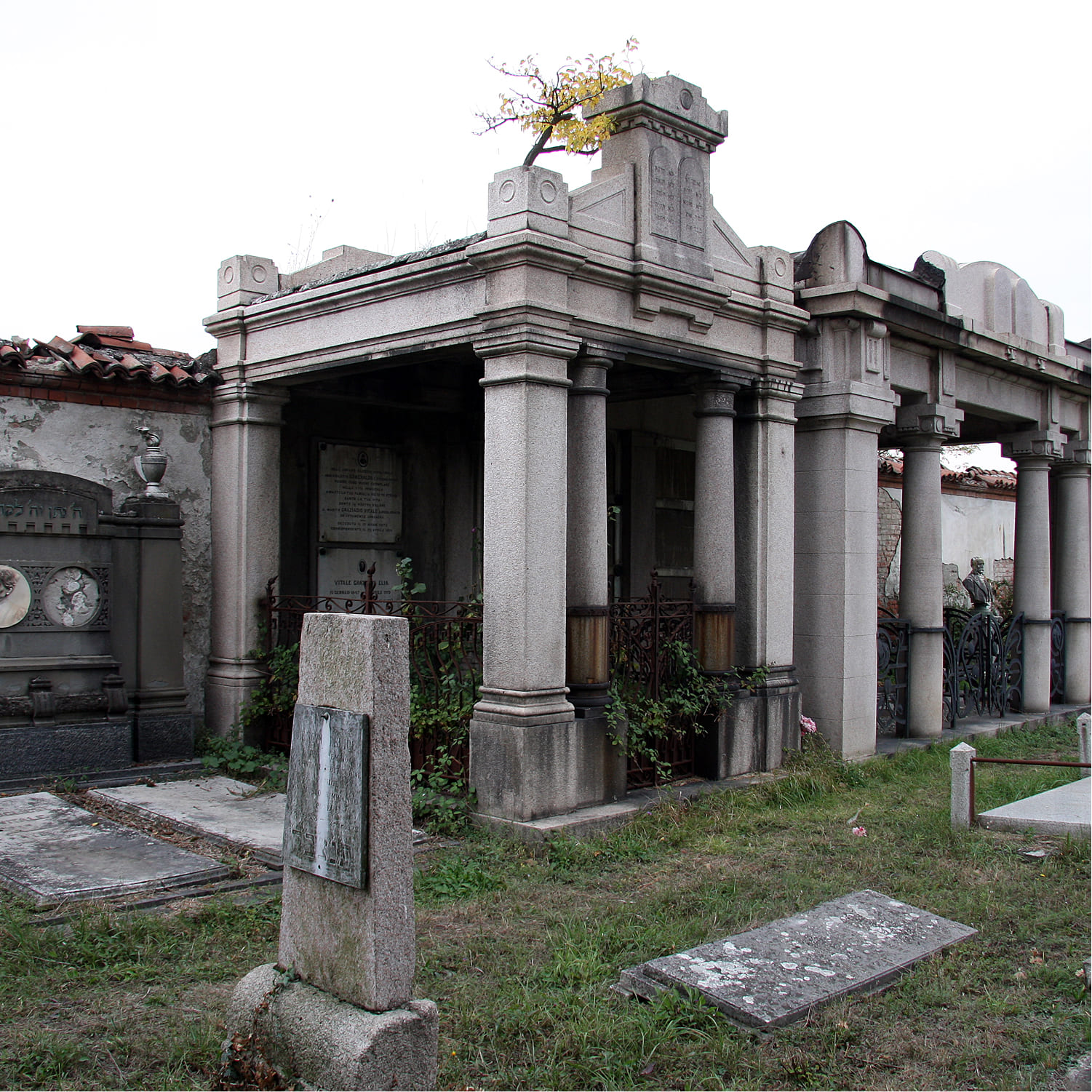
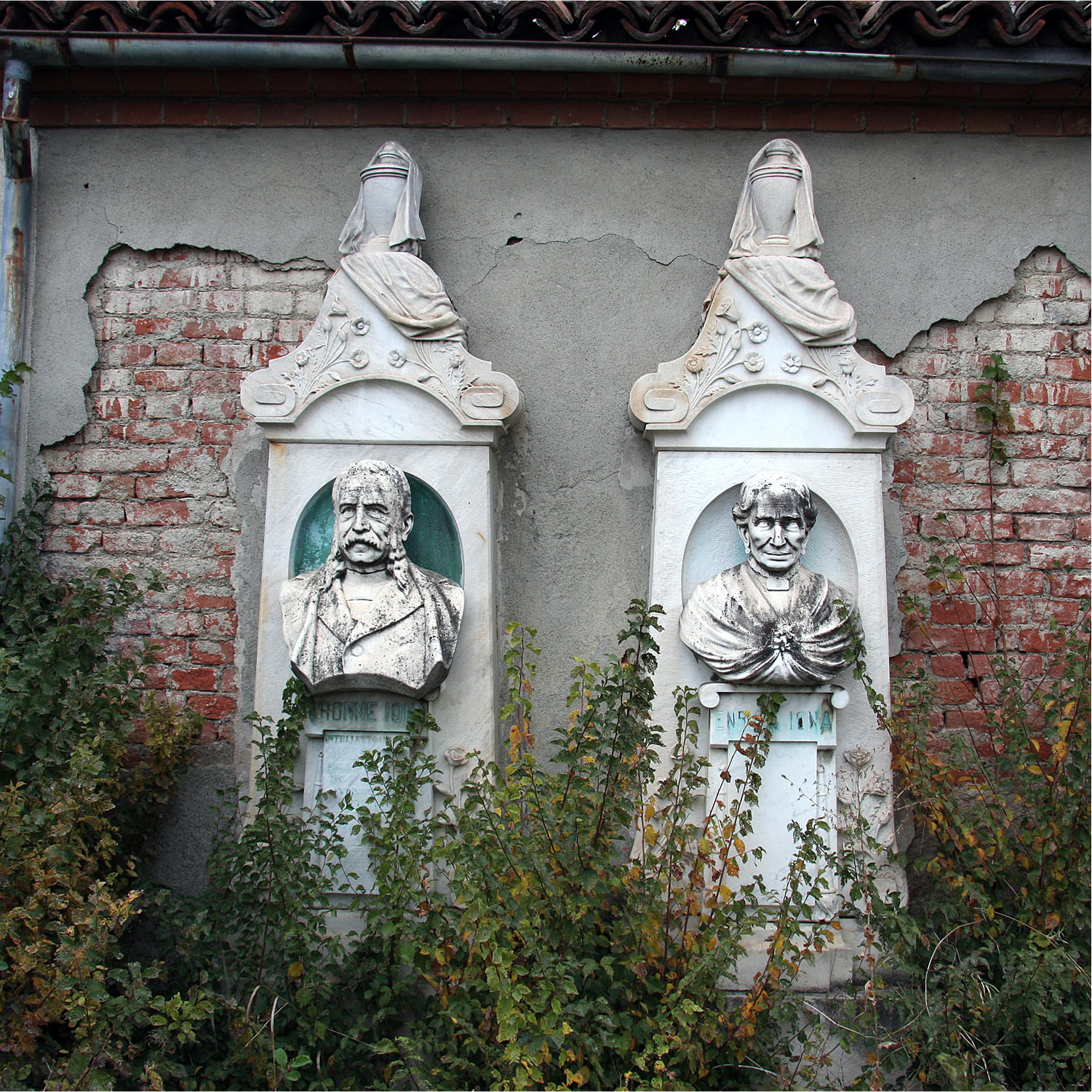
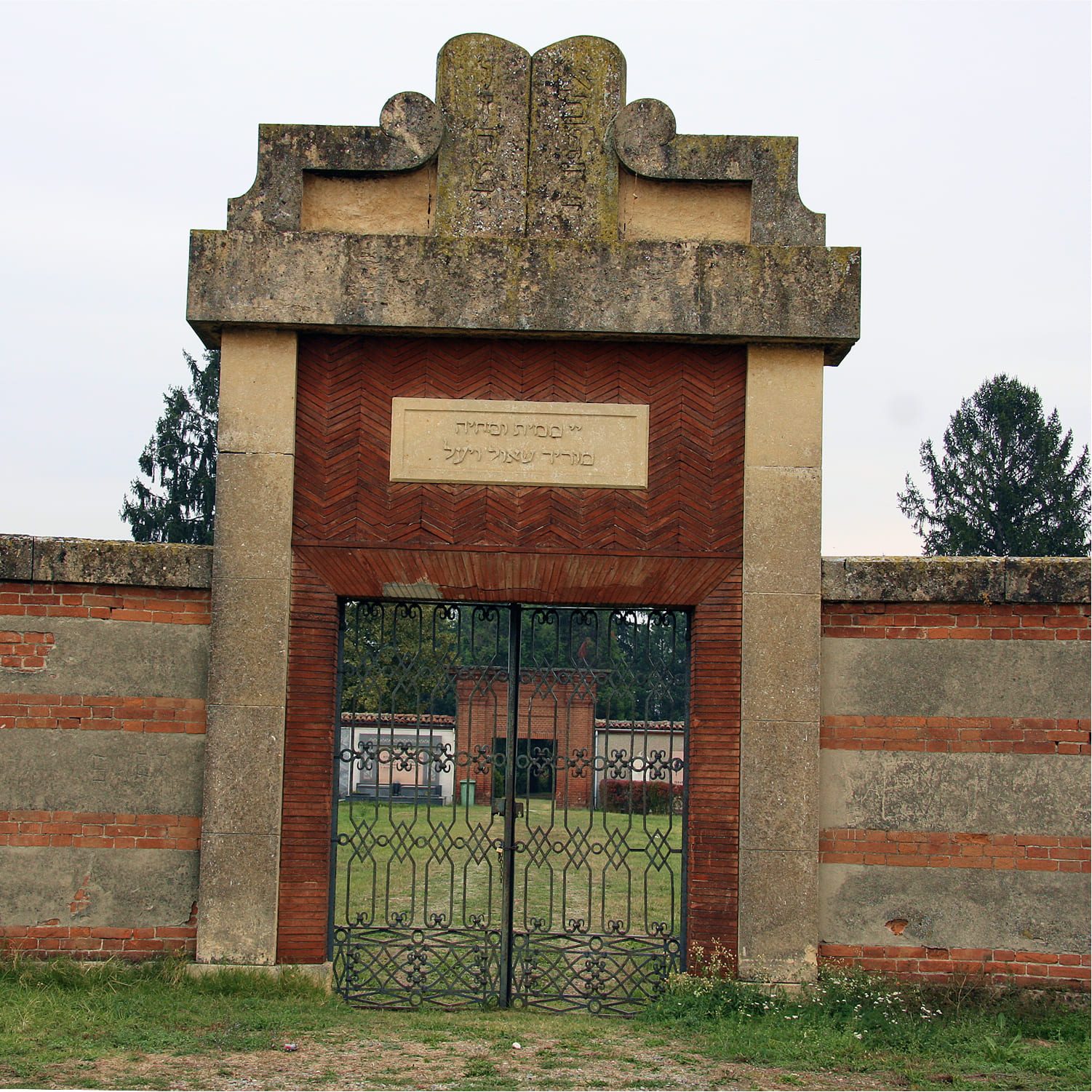
Jewish Cemetery