18:14
18:14 19:24
19:24 Wayakhel - Pekudè, Shabbath Ha-chodesh - Es. 35-1/38-20, Es. 38-21/40-38, Es. 12-1/12-20

Ivrea
The first records of a Jewish community in Ivrea date back to the 1440s, when violent riots broke out against the local Jews and attempts were made to loot their pawn shops. A stable presence was later documented with the arrival in 1547 of four brothers engaged in trade who obtained an initial ten-year residence permit. At the time, the community lived in the Borghetto suburb near the Ponte Vecchio. During the 17th century, many Jews from the surrounding countryside, fleeing attacks and intolerance, moved to Ivrea, and the community, having grown in size, was relocated to a central location near Via Arduino. The ghetto was established by the House of Savoy in 1725 in a building on what is now Via Quattro Martiri, where the community headquarters remains today. In 1801, a band of peasants from the surrounding countryside poured into the city to devastate and plunder the ghetto. The Jews of Ivrea celebrated their narrow escape, thanks to the municipality’s intervention, for many years.
Equal rights came in 1848; for several years, the community continued to grow, thanks in part to the city’s industrial development; with the economic crisis, the community also gradually dwindled to its current meager numbers.
The Sinagogue
There was a German rite oratory in Ivrea until the first half of the 19th century, which coeval documentation referred to as “too small and lacking in decorousness”. As part of a profound community reorganisation undertaken in 1822, the Chief Rabbi of Piedmont,
Both synagogues are located in a building of the old ghetto; they are devoid of any external monumental characteristics which allude to their presence.
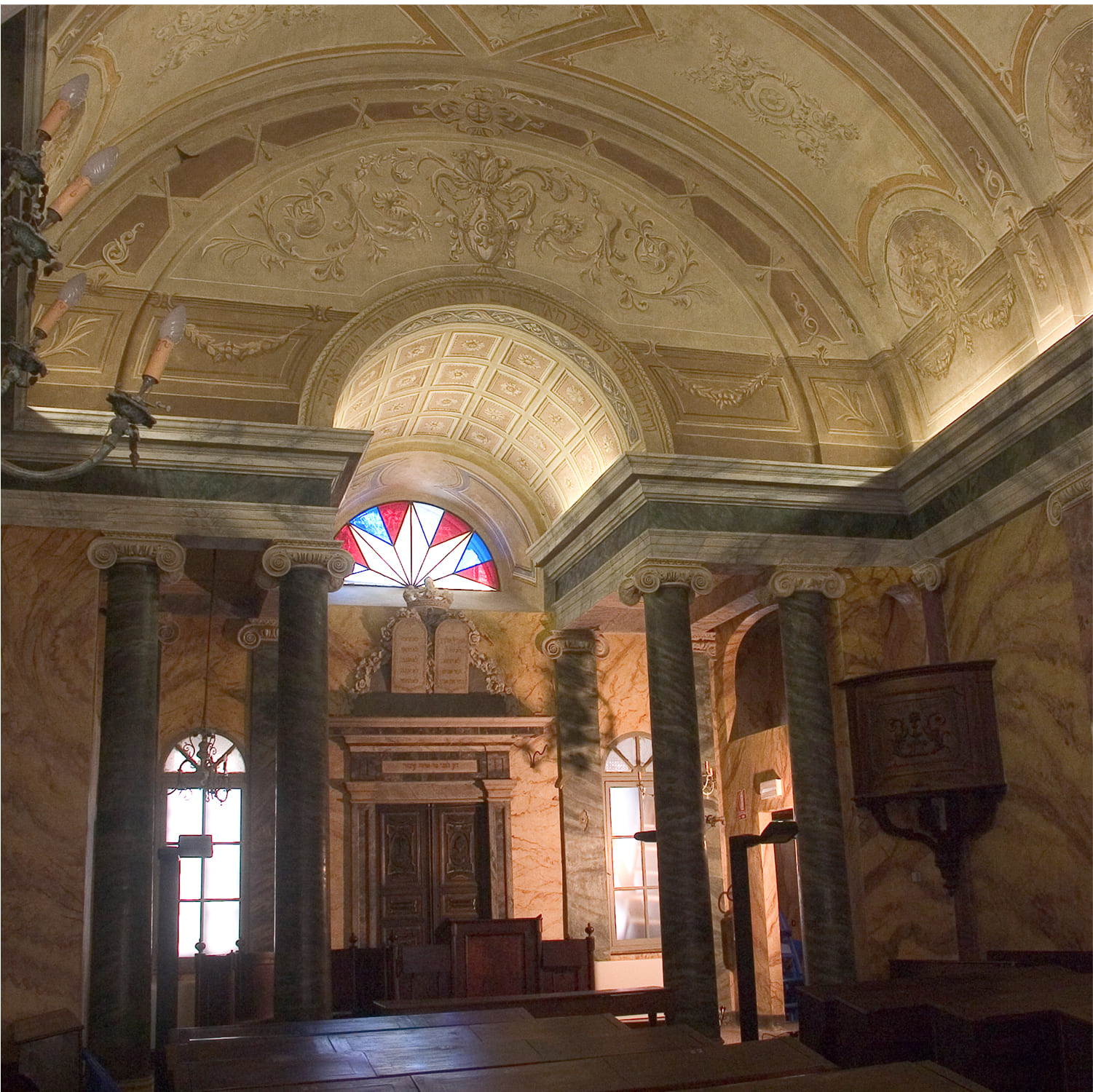
The arrangement of the large temple’s hall is typical of Emancipation period synagogues, inspired by the model of Catholic churches: two sectors of benches in parallel rows facing the tevah and aron, both located in the same area, opposite the entrance zone. The hall perimeter features exquisite marble-effect painting and is lined with columns and lesenes with Ionian capitals and entablatures supporting an ample frescoed barrel vault.
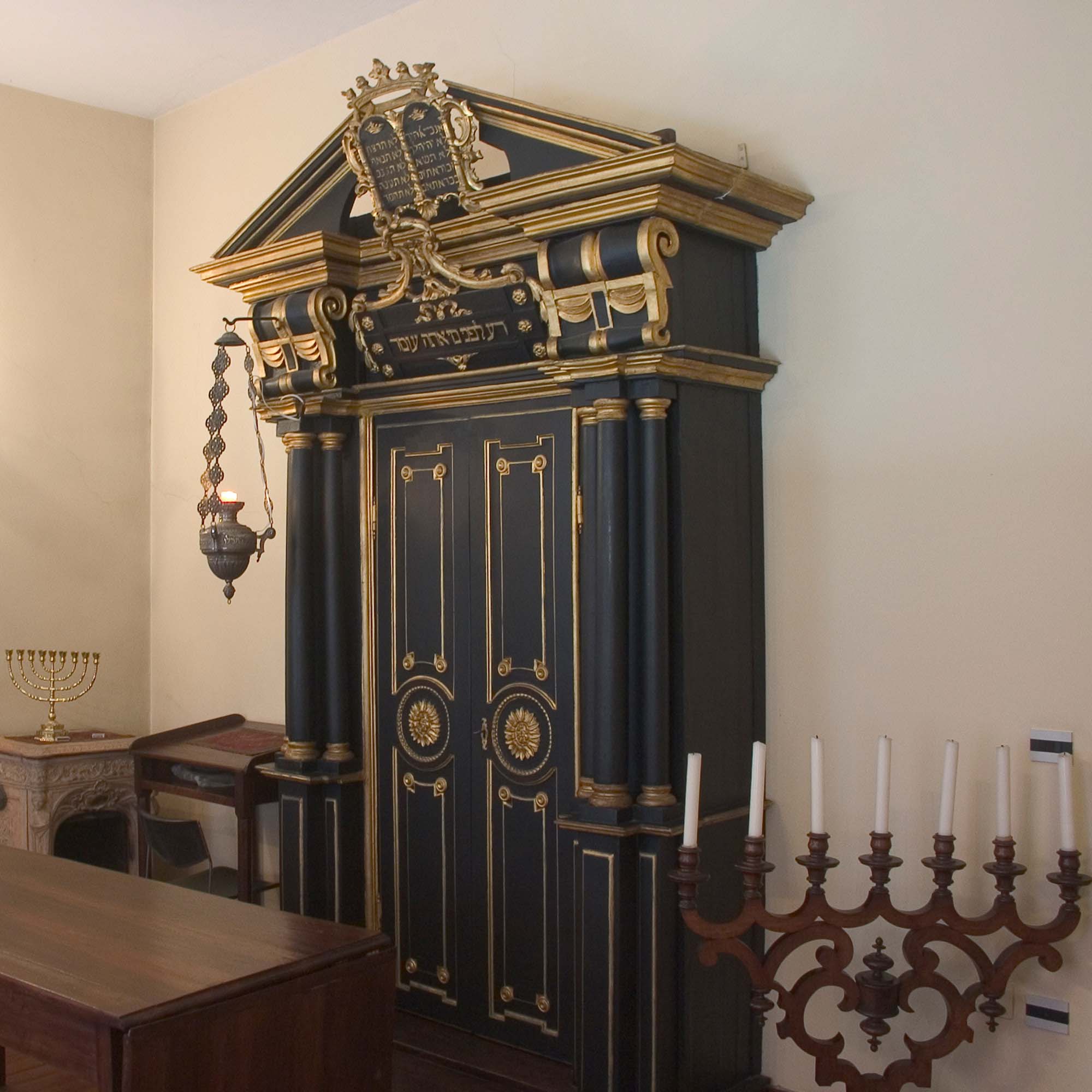
The small winter oratory contains a valuable carved black-lacquered wooden aron with gilded decorations.

Jewish Cemetery
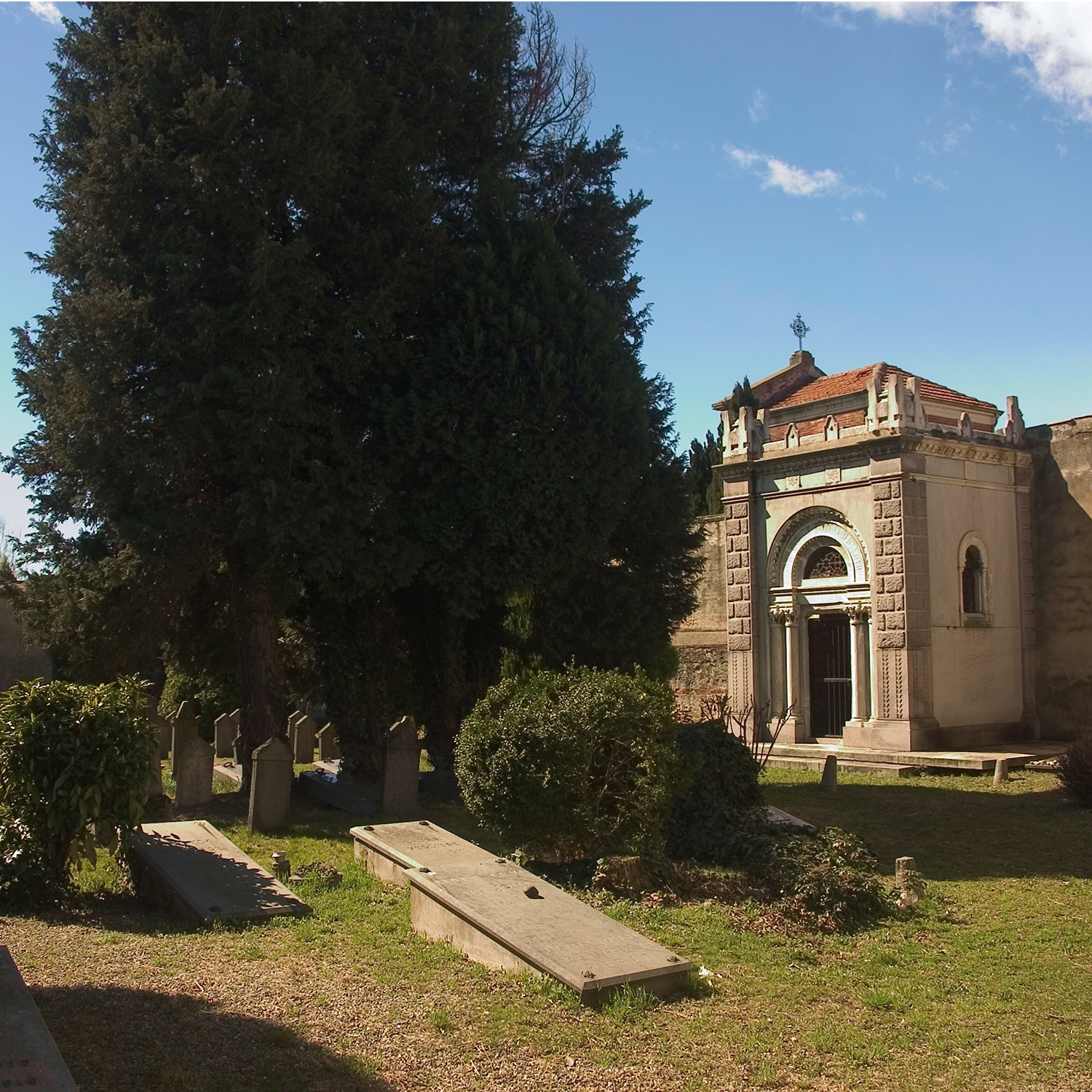
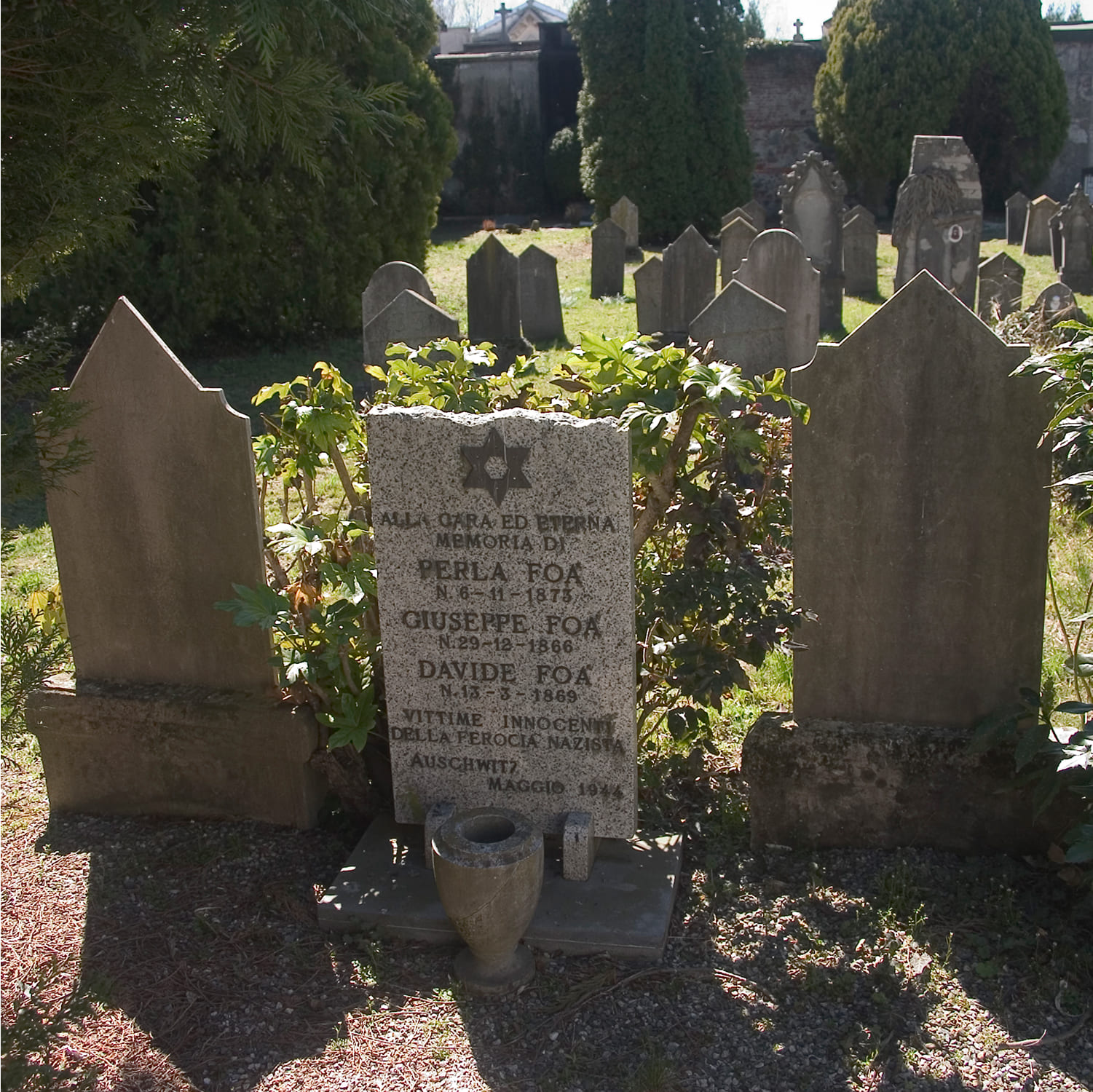
No trace remains of the Jewish cemetery of Porta Aosta. The Jewish community first contemplated the purchase of new land in 1822 at a time of important action for community reorganisation. The field for the new cemetery was granted in 1863 and is still in use today. It constitutes a separate section of the municipal cemetery. With the exception of a monumental family chapel, it contains individual graves with simple, aligned gravestones, in accordance with tradition. One plaque commemorates Polish and Russian soldiers who died in the hospital of Ivrea during the First World War. Some of them were buried in this cemetery.