18:14
18:14 19:24
19:24 Wayakhel - Pekudè, Shabbath Ha-chodesh - Es. 35-1/38-20, Es. 38-21/40-38, Es. 12-1/12-20

Cuneo
The first Jewish presence in the Cuneo area dates back to around 1406, when some Jews were allowed to reside there to carry out money lending activities. In 1436, pursuant to the Statuta Sabaudiae, they were required to settle in a single area of the city, along the Mondovì district, where the ghetto would be established in 1724. Over the years, the community grew large and, at times, well-integrated. After 1570, Jews fleeing from the Contado Venassino joined them, known as the “Juifs du Pape” because they were descendants of those Jews the Pope had brought with him during the Avignon captivity.
The establishment of the ghetto, between Via Mondovì and Via Chiusa Pesio, did not prevent a peaceful coexistence with the citizens, with whom the Jewish population had always shared the most difficult moments, especially during the seven sieges the city endured. Of the last of these, by Austro-Russian troops in 1799, three unexploded cannonballs that hit the ghetto and the surrounding area are still visible. Two remained embedded at the entrance to Via Chiusa Pesio; a third hit the synagogue, where it was walled up. These were the years of the first legal equalization desired by the French authorities. After the Restoration, the final Emancipation took place in 1848. Urbanization during the twentieth century subsequently led to a rapid numerical decline.
The Sinagogue
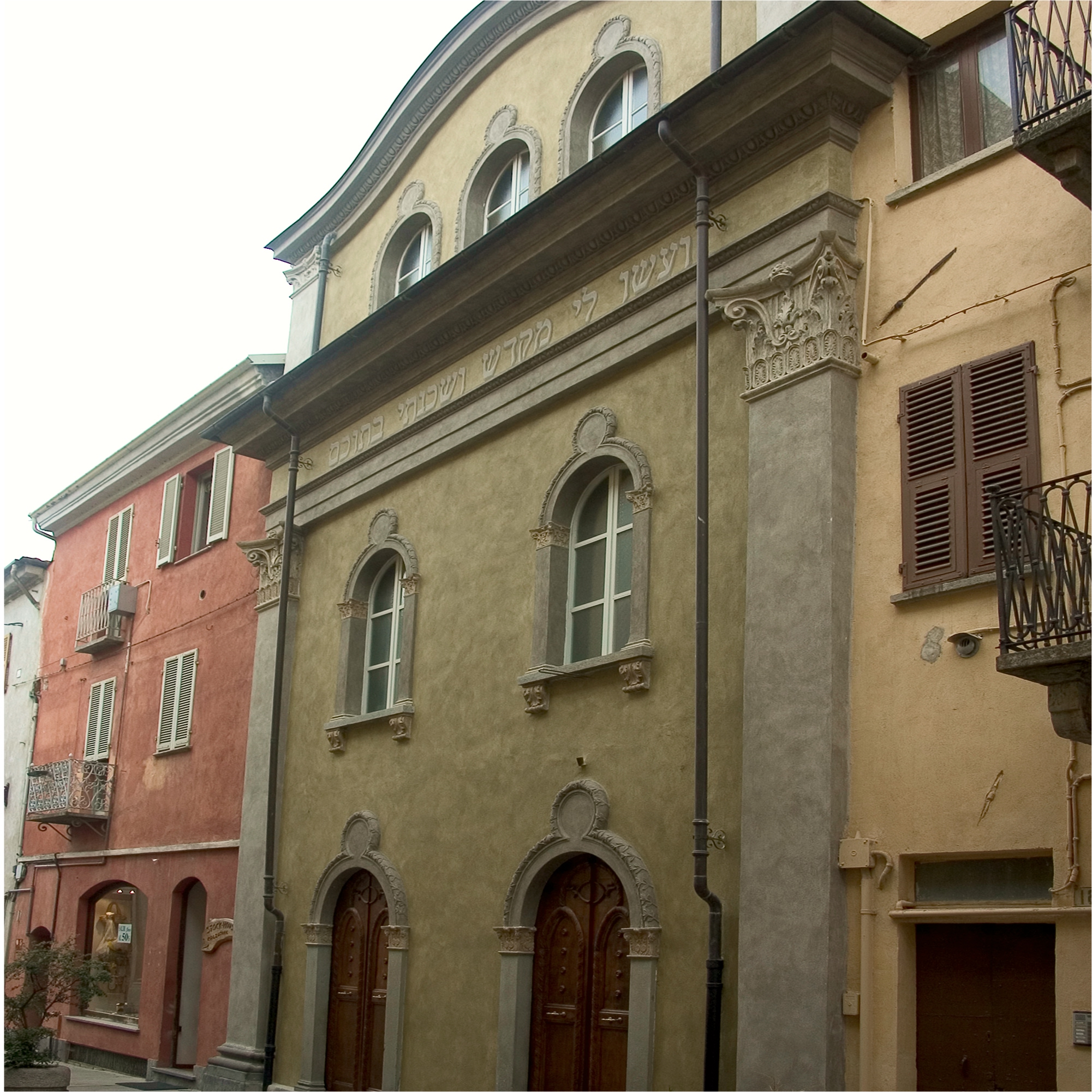
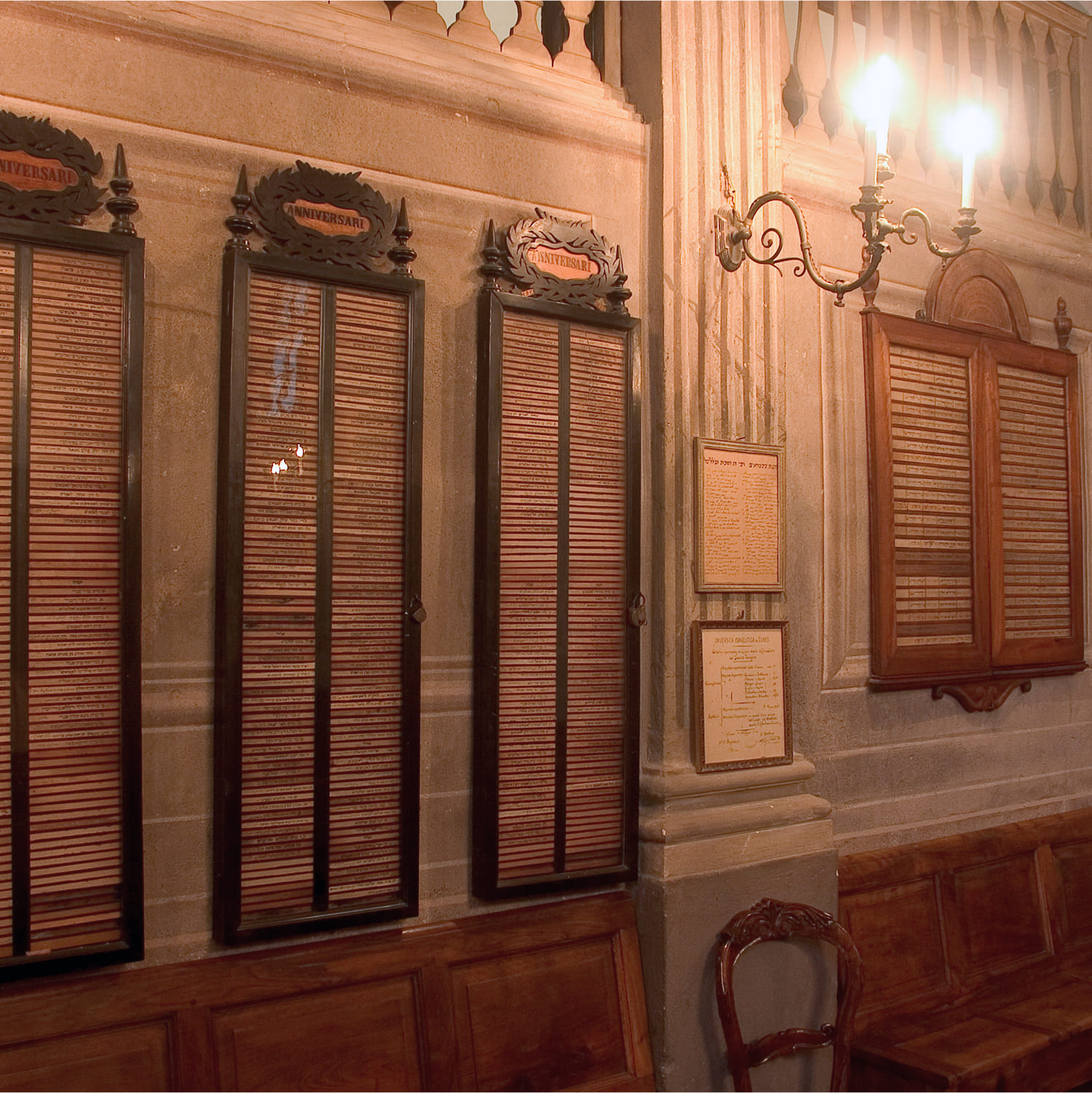
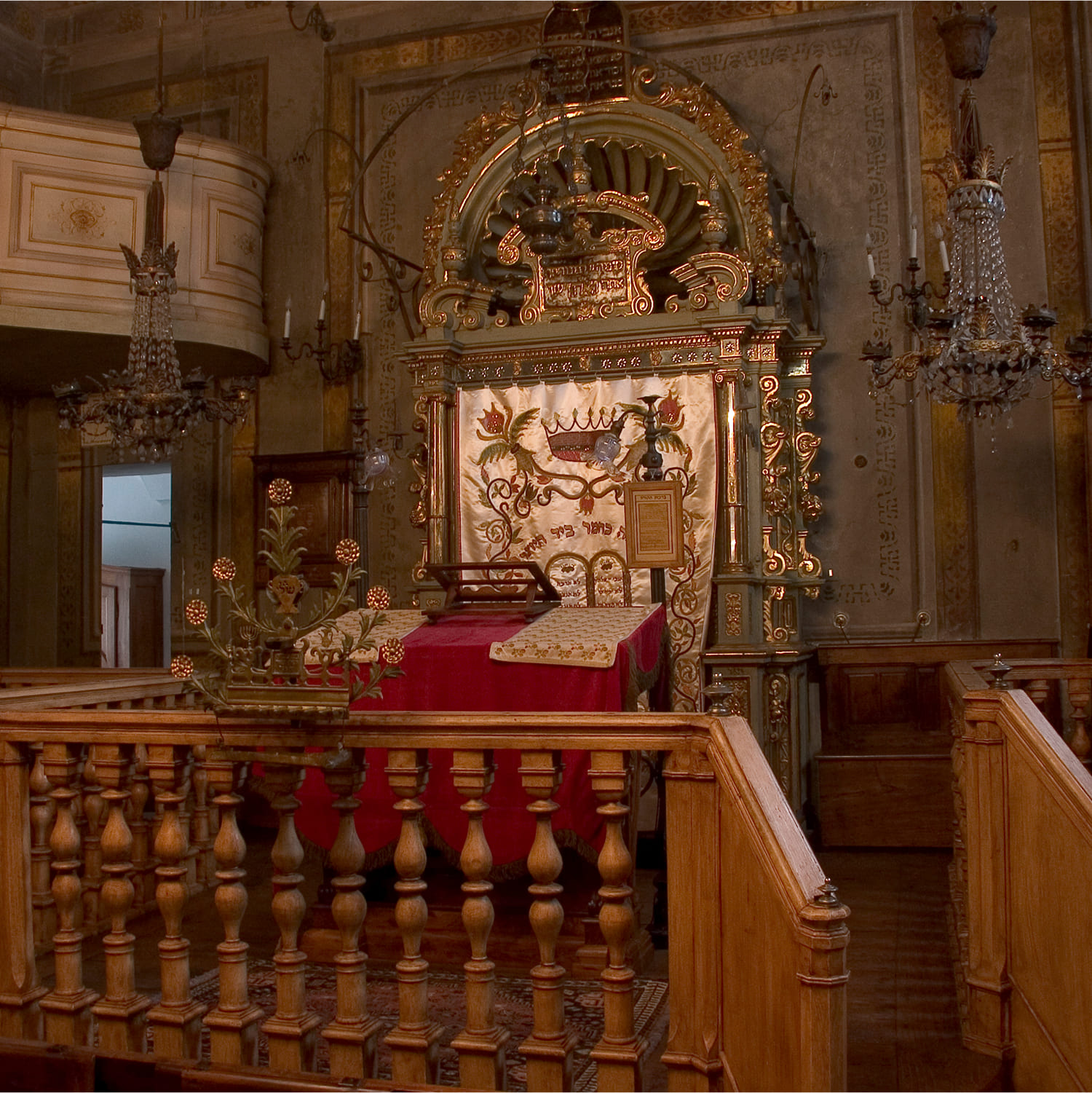
Housed in the same building for centuries, the Cuneo synagogue was renovated in 1884, following the Emancipation. The building was given a new façade that represented the local identity, which in previous eras was not permitted to be displayed externally. The synagogue hall is located on the second floor; its walls are decorated with elegant panelled decoration and a painted ceiling with a false dome. Like many synagogues built or renovated after the Emancipation, its floor plan is inspired by that of Christian churches. It features pews aligned in parallel rows facing the tevah and aron, which are integrated into a single raised area surrounded by a balustrade. The wooden aron from 1783 is particularly valuable, with doors finely decorated with a large central menorah and sacrificial instruments from the Temple of Jerusalem. Beneath the hanging pulpit—another element borrowed from the Christian model and dating back to the last renovation—a cannonball has been walled in. It fell into the synagogue during the Austro-Russian siege of 1799 but remained unexploded. To commemorate the narrow escape, the community established a special holiday called “Purim of the Bomb“.
On the first floors are the community classroom, preserved with its original furnishings, and the “Davide Cavaglion Library and Study Center on the Jews in Piedmont“, part of the network of civic libraries.

Jewish Cemetery
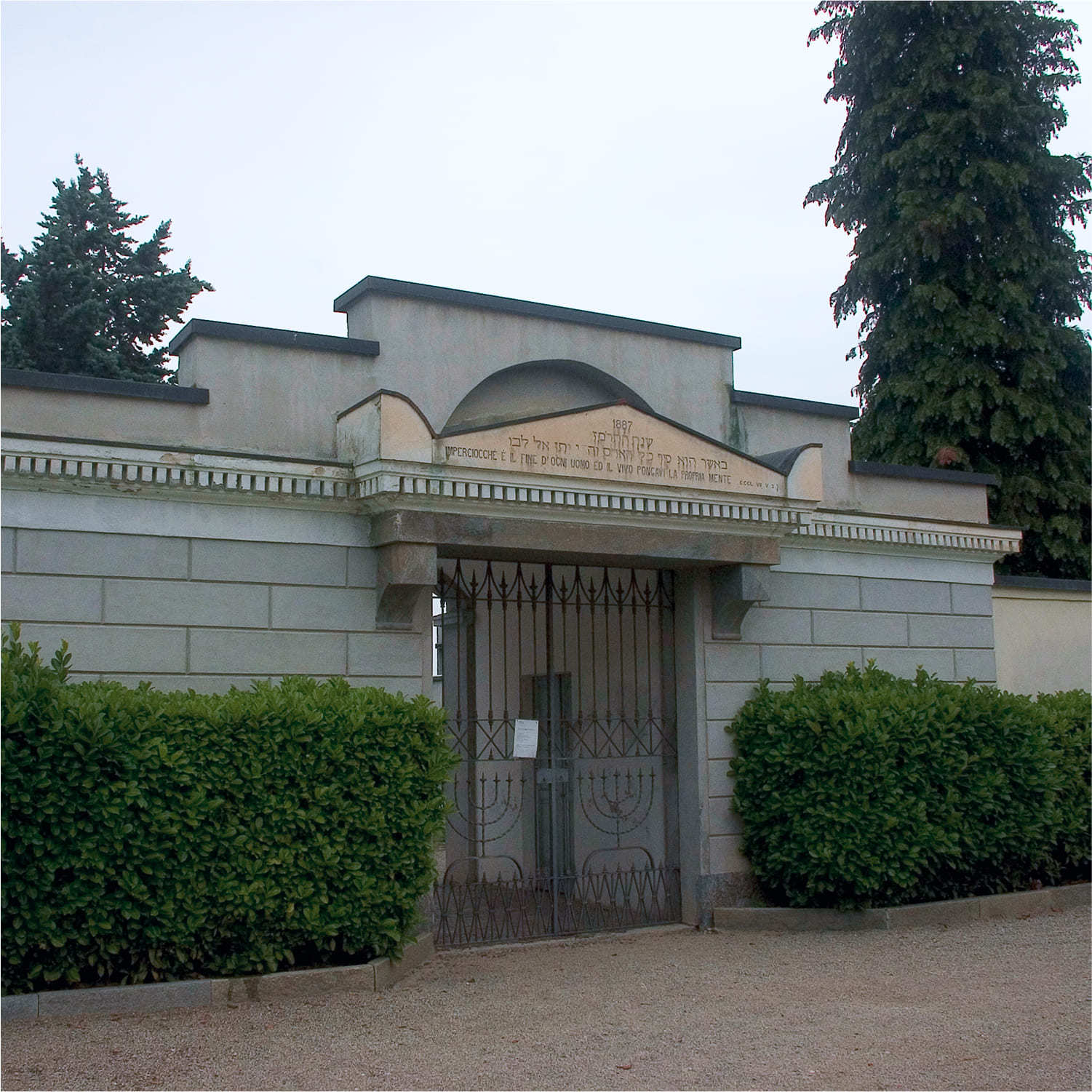
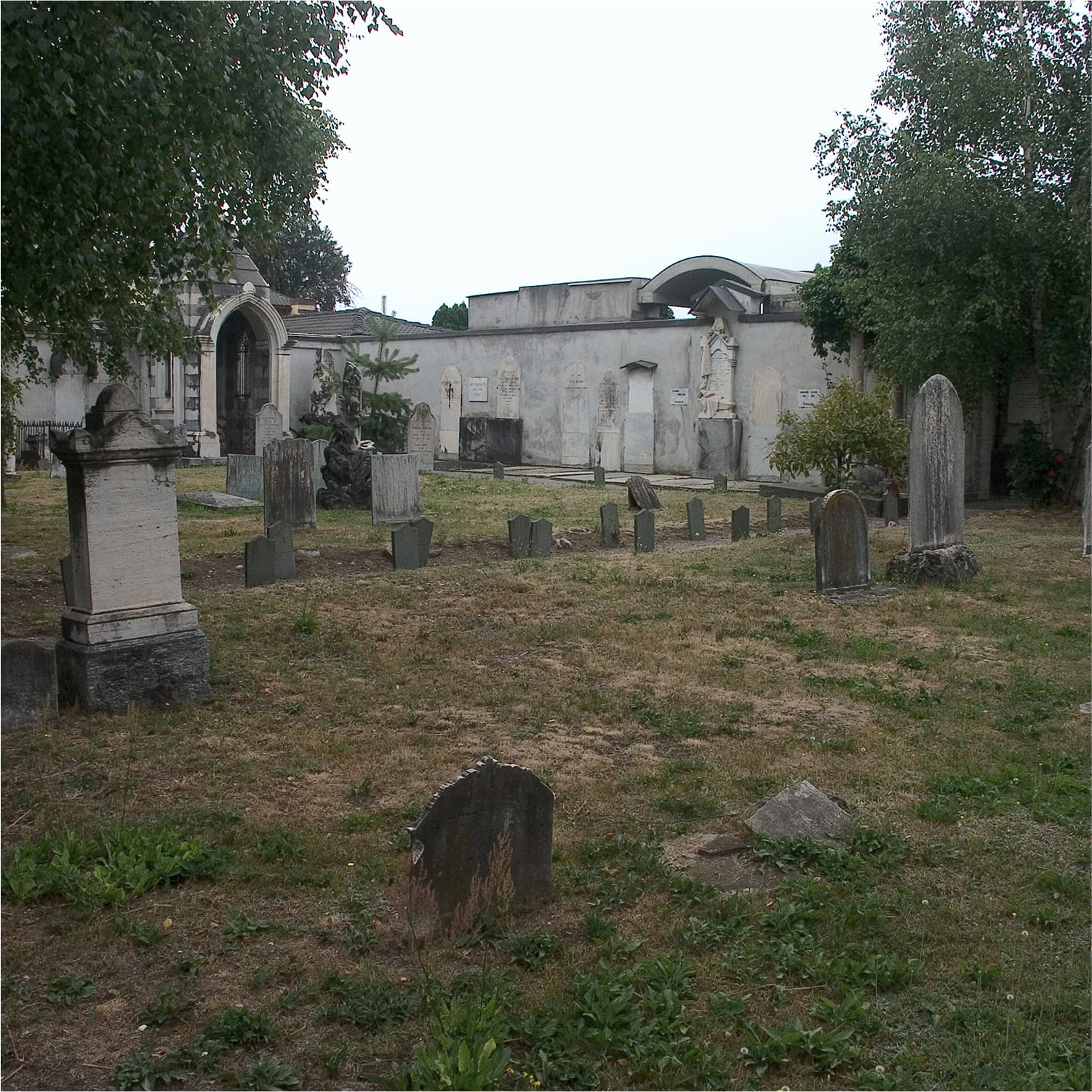
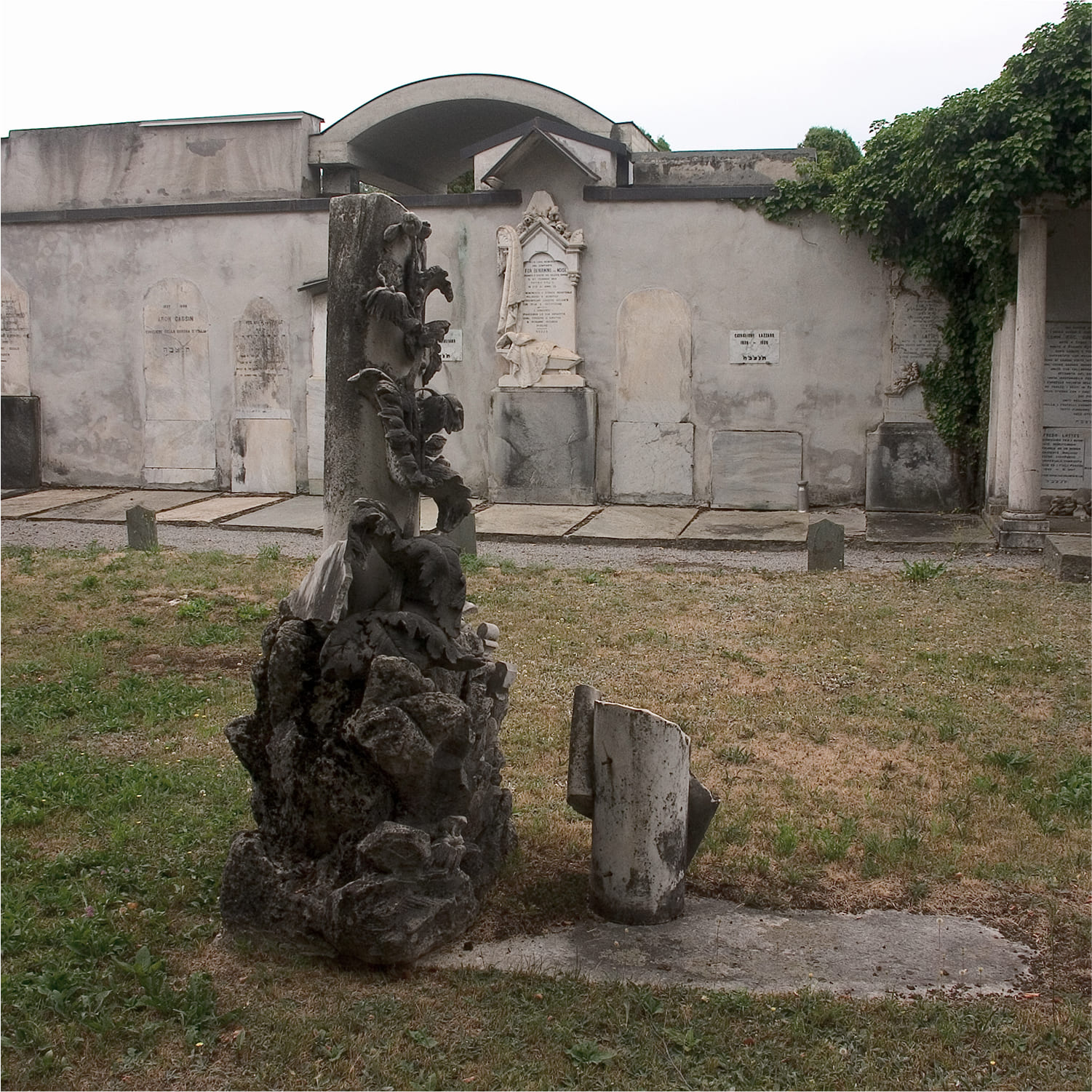
The original burial site, situated near the river Gesso, was purchased by the Lattes brothers in 1610. The site was shared with the Jews of the nearby community of Mondovì until 1730, but in the ‘30s it was completely dismantled to allow the construction of a ring road.
A plaque commemorates the deportees from the nearby concentration camp of Borgo San Dalmazzo.